







- It’s Getting Late! It’s Now or Never
- Leadership - Desperately Needed!
- Islamic Expansion in Texas
- Republicans Finding Common Ground
- Former Moms for Liberty Chairs in South Carolina Address Massive Departure from Organization
- Greenville County Holding Public Meetings on 1% Transportation Sales Tax Referendum
- Beyond the Monuments - Finding the Forgotten Grave of Dicey Langston
- The Myth of Voting for the Lesser of Two Evils
- Thurmond and Murkowski Won as Write-Ins. Is This Year’s Senate Race Really the Same?
- South Carolina Gas Tax Climbs From Near Bottom Nationally to 30th in 2026
- 2026 Voting Information: Early Voting & Polling Locations
- Equipping the Persecuted: Weekend Terror Alert Helped Avert Wider Massacre as Slaughter of Christians Continues to Ravage Nigeria Unchecked by Government
- Hunting Island's Lighthouse Was Built to Outsmart the Atlantic's Shifting Shoreline
- Crime Stoppers Luncheon Remembers Greenville’s Fallen While Honoring Those Who Continue to Serve
- Writing In Ralph Norman Is Writing Off His Own Judgment
World War II Veteran and Patriot at 102
- Details
- By Mike Scruggs
- Category: Mike Scruggs' Column
Twenty Missions as a B-17 “Flying Fortress” Gunner

At 144 Lombard Street in Clayton, North Carolina, less than a minute walk to Main Street, is a fascinating reminder of North Carolina’s agricultural heritage. On the front of the warehouse-like building, completed in 1914, are painted two images of mule heads. The name on the building is “BM Robertson Mule Co.” The business front also advertises “Farm Equipment.” The owner, operator, and son of the founder of that business is Sam Robertson, who celebrated his 102nd birthday on September 25.

Turkey, the Kurds, and Kurdistan
- Details
- By Mike Scruggs
- Category: Mike Scruggs' Column
Understanding the Tensions
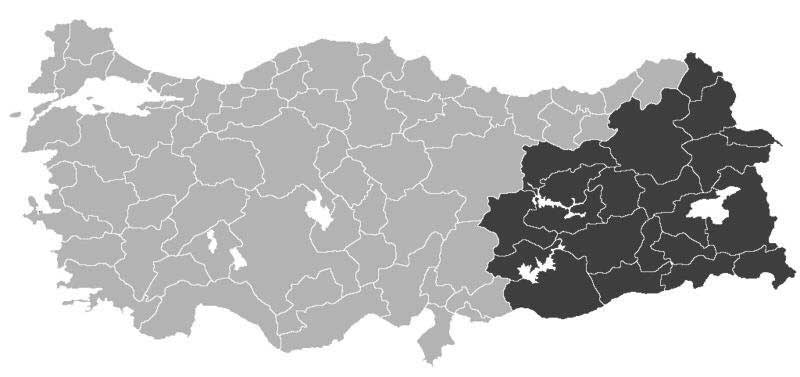
Turkey sits between Europe and the Middle East. About three percent of it on the western side of the narrow passage through the Bosporus, the Sea of Marmara, and the Dardanelles is in Europe, and the rest, situated on the Anatolian Peninsula, is the western most extension of Asia. It is 99.8 percent Muslim. Aside from the United States, Turkey is the most populous nation in the NATO alliance with 82 million people. It has a free market economy, which is the 13th largest in the world. With 355,000 active military and 170,000 ready reserves, it has the largest armed forces in NATO except for the U.S. The Turkish Army has 2,500 tanks and over 9,000 other armored fighting vehicles.

Alarming American Trends
- Details
- By Mike Scruggs
- Category: Mike Scruggs' Column
Sharp Drop in Christian Faith
Political Implications
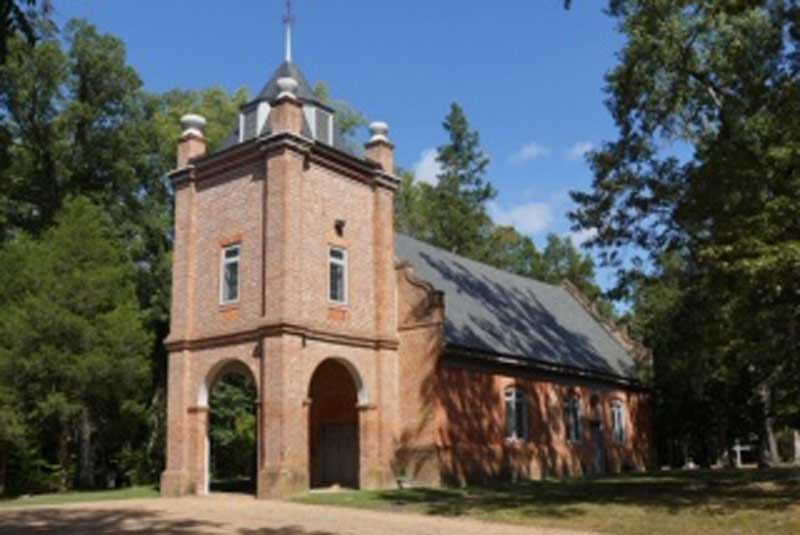
St. Peter's Parrish Church near Talleysville, Virginia. Completed 1703. National Historic Register
A Pew Research Report released on October 17 found that the number of American adults who describe themselves as Christians has declined from 77 percent to 65 percent in a single decade. This research used surveys of 12,000 to 25,000 telephone respondents over more than a decade. In all, the Pew Research Report covered 88 surveys and nearly 169,000 American interviews.

Gun Battle at Ban Karai Pass
- Details
- By Mike Scruggs
- Category: Mike Scruggs' Column

Fire in the Night Sky
Late in evening of February 22, 1967, at the Royal Thai/U.S. Air Commando air base at Nakhon Phanom (NKP), Thailand, fire trucks, ambulances, and other emergency, service, and Air Police vehicles rolled into place on the taxiways of the 6,000-foot pierced steel planking runway. One of the 606th Air Commando squadron’s A-26 attack-bombers returning from a combat mission on the border of Laos and North Vietnam had been badly damaged in a ferocious gun battle with North Vietnamese anti-aircraft guns. With their landing gear unusable, one of their two engines shut down, a fuel leak, and one of its main landing gear tires burning, their choices were grim.

Sweden and the Fate of the West
- Details
- By Mike Scruggs
- Category: Mike Scruggs' Column
The Toxic Dangers of Uncontrolled Immigration
As economists Robert Lawson and Benjamin Powell point out in their new book, Socialism Sucks, Sweden is not a socialist country. The Fraser Institute’s Economic Freedom Index, which measures how well a country respects private property rights, encourages free trade, keeps business taxes low, protects the value of its currency, and keeps business regulations to a minimum, rates Sweden 7.54 on a scale of zero to ten. This ranks them 27th out of 159 countries measured.
 Mike Scruggs is the author of two books: The Un-Civil War: Shattering the Historical Myths; and Lessons from the Vietnam War: Truths the Media Never Told You, and over 600 articles on military history, national security, intelligent design, genealogical genetics, immigration, current political affairs, Islam, and the Middle East.
He holds a BS degree from the University of Georgia and an MBA from Stanford University. A former USAF intelligence officer and Air Commando, he is a decorated combat veteran of the Vietnam War, and holds the Distinguished Flying Cross, Purple Heart, and Air Medal. He is a retired First Vice President for a major national financial services firm and former Chairman of the Board of a classical Christian school.
Click the website below to order books. http://www.universalmediainc.org/books.htm.
Browse by the Top Tags ...