








- Ten Toes In: Why Trump Accounts Make Sense for North Carolina's Small Businesses
- Remnant Called -
- Former Moms for Liberty Chairs in South Carolina Address Massive Departure from Organization
- Same Job. Two Résumés. Graham and Norman Make Their Case for the US Senate
- Beyond the Monuments - Finding the Forgotten Grave of Dicey Langston
- The Myth of Voting for the Lesser of Two Evils
- Greenville County Holding Public Meetings on 1% Transportation Sales Tax Referendum
- AIPAC Lobbyists Grip on Congress
- Hunting Island's Lighthouse Was Built to Outsmart the Atlantic's Shifting Shoreline
- South Carolina Gas Tax Climbs From Near Bottom Nationally to 30th in 2026
- Briefing Notes from the Ukraine and Persian Gulf Wars
- Saudi Arabia’s Iran War Dilemma
- Crime Stoppers Luncheon Remembers Greenville’s Fallen While Honoring Those Who Continue to Serve
- Correcting Widespread Misconceptions about the Vietnam War
- 'Trapped Inside Myself' Explores One Man's Journey from Self-Destruction to Hope and Personal Transformation
Thermodynamic Problems with Abiogenesis
- Details
- By Charles Creager, Jr.
In any discussion of the origin of life, you need to consider the Thermodynamics of the problem. Creationists too often limit their arguments to the Second Law of thermodynamics, while evolutionists tend to ignore thermodynamics completely, as if simply adding energy magically reduces entropy. Both of these are oversimplifications that result from few people on both sides really understanding the thermodynamics involved. While the Second Law of thermodynamics is a factor, the situation is actually way more complex, and the thermodynamic barriers to abiogenesis are worse than the main arguments imply.
Information Theory and DNA
- Details
- By Charles Creager, Jr.
DNA is widely known as the code of life. Consisting of four nucleotides that form a form of digital code that contains all the instructions to make and run a particular Organism. A typical genome for complex organisms such as humans can have billions of bits of information. This represents a problem not only for a naturalistic origin of life, but the entire idea of universal common descent as well. Information theory focuses primarily on the transmission and reception of information, but there are also matters of the content.
The number one problem with regard to DNA and information theory is that all known information coding systems, as well as complex, specific Information comes from only one source, and that is an intelligent mind. This is a huge problem for any ideas of a naturalistic origin and progression of life.
Why Post-Flood Diversification of Animals Was Not Hyper-Evolution
- Details
- By Charles Creager, Jr.
The accusation of “hyper‑evolution” usually comes from critics who assume that creationists must invoke extremely fast, mutation‑driven, upward evolution to explain the diversity of animals after the Flood. But the actual creationist model is fundamentally different. Post‑Flood diversification in a young‑earth framework is not “hyper‑evolution” because it does not require the large‑scale, upward, novel‑information‑generating processes that evolutionary theory claims. Instead, it relies on pre‑existing genetic diversity, environmental sorting, founder effects, hybridization, and normal speciation mechanisms, all of which are well‑documented and do not require molecules‑to‑man evolution.
Reasons Why Someone May Reject a Particular Theory Promoted as Science
- Details
- By Charles Creager, Jr.
Creationists are frequently attacked for not accepting not just universal common descent evolution but the entire Big Bang-to-man story. Claims like anti-science, science denier, and insults to your intelligence and education, if you even question this atheistic view of origins. Daring to openly challenge it as a scientist has been demonstrated to be dangerous to one's career. Any legitimate scientific theory is going to thrive, taking on any opposition. Also, being able to raise questions about a legitimate theory can only help make it better if it's correct. All these common criticisms that you see fail to recognize the fact that there are some legitimate reasons why someone may reject a particular theory without rejecting science as a whole.
The Truth About Y Chromosome Adam
- Details
- By Charles Creager, Jr.
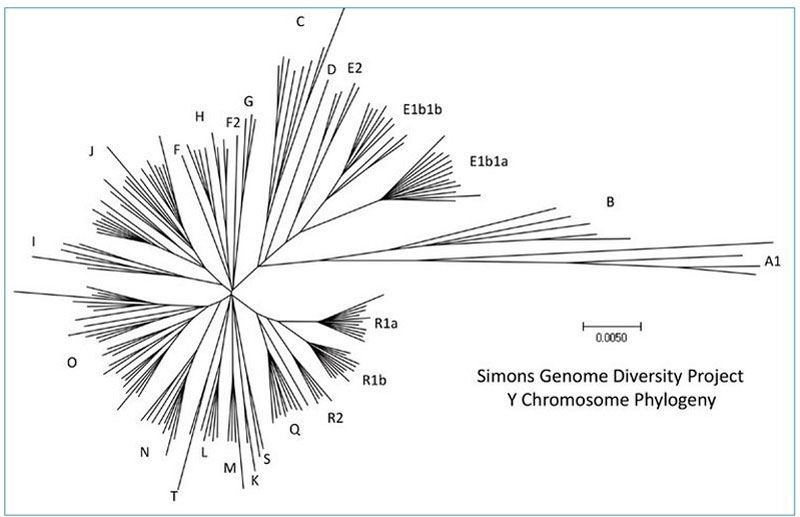
Genetic studies of the human Y chromosome from around the world uncovered a finding that surprised researchers: the data indicated that all living men trace their paternal lineage back to a single male ancestor. This outcome appears inconsistent with the evolutionary concept of universal common descent, which holds that humans arose from large, diverse populations; numbering at least in the thousands; not from a single individual. Under standard evolutionary theory, there should be no such thing as a 'first man.' Yet one group had long maintained that all humans ultimately descend from a single ancestral man.
Bible‑believing Christians, especially young‑earth creationists, have continued to assert that all humans descend from a single man, despite the evolutionary claim of universal common descent. Creationists argue that this genetic finding supports the Biblical narrative; something they have maintained for centuries based on Scripture. In their view, it was only a strictly atheistic commitment to explaining everything through purely naturalistic processes, excluding God from consideration regardless of the evidence, that led to the opposing claim.

The Real Story of Mitochondrial Eve
- Details
- By Charles Creager, Jr.
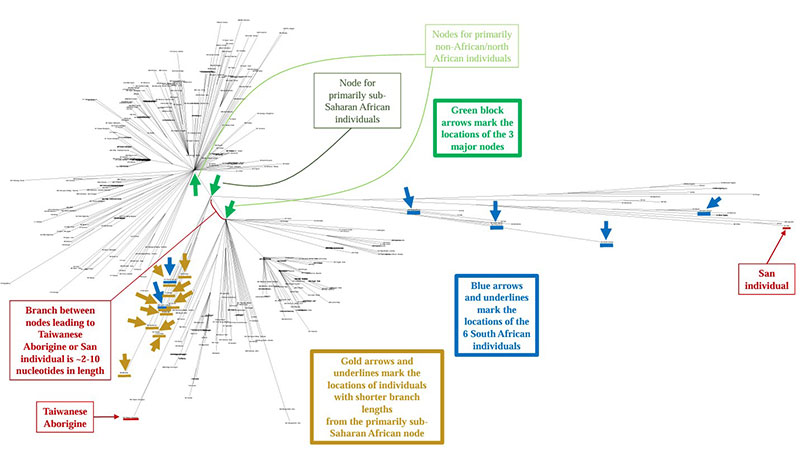
Several years ago, studies of human mitochondrial DNA from around the world discovered something that surprised geneticists. They discovered, to their surprise, that the results showed living humans are descended from a single woman. From an evolutionary perspective, this should not be the case. Humans should be descended from whole populations that, at minimum, would be in the thousands. According to the evolutionary idea of universal common descent, populations were involved, not individuals. Therefore, from their perspective, it is impossible for there to have been a first woman. However, there was one group of people that was claiming that all human beings are descended from a single woman all along,

The Ultimate Problem with Scientific Materialism
- Details
- By Charles Creager, Jr.
The philosophical mindset of institutionalized science is that of absolute atheistic naturalistic materialism. It is fundamentally naturalistic because only naturalistic causes will be considered. It has almost become a determination to force naturalistic explanations on everything.
Inherently atheistic
It is atheistic because it fundamentally excludes God, as demonstrated by the reaction to intelligent design. It is fundamentally materialistic because only materialistic causes are considered. This is done despite Quantum Mechanical evidence to the contrary.
Naturalism of the Gaps: Why Unproven Materialism is Often Mistaken for Science
- Details
- By Charles Creager, Jr.
We’ve all heard of the 'God of the Gaps,' but there is a far more pervasive silent player in modern academia. Here, we dissect how unproven materialism masquerades as objective science to bridge massive voids in empirical data. It is time to look behind the curtain at the philosophical commitments that treat gaps in our knowledge as evidence for a physicalist reality.
Think science is always based on hard evidence? What if some of our most 'scientific' theories are actually powered by blind faith? Today, we are exposing the 'Naturalism of the Gaps' logical sleight of hand that replaces missing data with materialist assumptions. Is your worldview built on facts, or just a secular mirror of the very dogmas it claims to reject?
Are All Mutations Truly Random?
- Details
- By Charles Creager, Jr.
One of the most powerful arguments against universal common descent evolution is the randomness of mutations. The counter argument is that mutations are not truly random because in some cases natural selection keeps them from being truly random. However, this presupposes that Natural Selection is powerful enough to overcome the randomness of mutations. There is no question that there is a tendency for mutations to be random to some degree. The primary question before us is; are all mutations truly random?
Defining "Random": Statistical vs. Biological Meanings
Before diving into biology, it is crucial to establish what science means by "random." While mutations may be unpredictable regarding where and when they will occur and the exact nature of the mutation, they are not mathematically or physically uniform in distribution across the genome. There are factors that prevent them from being random in the sense of being evenly distributed, but they are still clearly random in how, where and when one will occur. They are just unevenly distributed throughout the genome.
The Common Evolutionist Attack that Creationists Are Just Saying “God Did It.”
- Details
- By Charles Creager, Jr.
A common attack by evolutionists against creationists is that they are just saying “God did it.” This is a straw man, simply because creationists are saying a lot more of than that God did it. If you bothered to read not just creationists material but the Bible itself, you would see actual processes describe and not just the broad statement that “God did it.” Now ultimately; God did indeed do the creating but claiming that Creationists are just saying “God did it” is at best an oversimplification. It would be like saying that evolutionists are just saying “natural processes did it.” Neither of these is an accurate representation of the position.
The Principle of Entropy and the Application of Energy
- Details
- By Charles Creager, Jr.
Without the application of external energy, the entropy of a system will always increase. This is the heart of the second law of thermodynamics. However, contrary to how it is often stated the application of energy does not magically reduce the entropy of a system. The simple fact of the matter is that the entropy of the energy being applied to the system determines how the energy affects the entropy of the system.
What is energy?
The basic scientific definition of energy is: “the ability to do work.” Energy is what allows everything in the universe to move and do things. We take in energy from the food we eat and use it to run our bodies. Energy comes in many forms: mechanical, kinetic, Thermal, chemical, electrical, and radiant. There are ways of turning all of these forms of energy into useful work. It is also energy that is responsible for mass, and this allows us to control our motion.
Why Do Evolutionists Frequently Insult Creationists?
- Details
- By Charles Creager, Jr.
There are many examples online showing a tendency among Evolutionists to respond to creationists with insults and other types of personal attacks. They frequently accuse creationists of being anti-science, science deniers, and insulting their intelligence, just because they reject a specific theory promoted as science. Sometimes initially rejecting a theory can help give someone a better understanding of it, if they eventually accept it. When I was younger, I struggled for years with Special and General Relativity as well as Quantum Mechanics. Eventually, I found answers to the problems that I had with them, and today you will find me a strong supporter of all three. In other words, I had the freedom to question them, and it actually helped me to understand them better. The question before us is: why do evolutionists frequently insult creationists?
Dealing with the Claim that Creation is Magic
- Details
- By Charles Creager, Jr.
Evolutionists will frequently dismissively call creation magic. The basis for it is the fact that creationists refer to God, and it is a supernatural perspective on the origin of the world and history. However, the reason for invoking this claim is simply as an excuse to be dismissive of anything creationists have to say. Here we go through the arguments showing why it is completely false.
Creation is not magic; it is caused by intelligence and intent.
Magic is typically defined as the use of supernatural power without mechanism or structure. Creation and other acts of God, however, are caused by intelligent intent, and on several occasions in the Bible actual processes are described. For example, in Genesis 2, it describes God as forming Adam out of the dust of the Earth and breathing into his nostrils the breath of life. This is describing actual physical processes and mechanisms.
The “God of the Gaps” Accusation
- Details
- By Charles Creager, Jr.
The “God of the gaps” is the idea that God is invoked as the explanation for phenomena that science has not yet explained. It often showed up in discussions in relation to debates following the publication of On the Origin of Species by Charles Darwin. It has been significant in discussions between evolutionists and creationists. Now, while creationists have sometimes used it, evolutionists frequently falsely accuse creationists and intelligent design proponents of using it. Here we discuss five claims made by evolutionists that creationists use the “God of the gaps,” Along with five refutations of the claim that creationists use it.
Is the Bible Pro-Slavery?
- Details
- By Charles Creager, Jr.
One of the claims made against the Bible is that it supports slavery. One of the ironies is the fact that the Bible was actually used to argue against slavery. The critics will claim it was also used to support slavery; however, this is more a case of those who supported slavery twisting the Bible to justify themselves.
The Basis of the Claim
The real question is: Does the Bible actually support slavery? Answering this question requires looking at what the Bible actually says. Unlike most claims against the Bible, this one is not totally without merit. The problem is that most modern translations do indeed appear to back up slavery.
The Five Laws of Thermodynamics
- Details
- By Charles Creager, Jr.
Officially, there are only four laws of thermodynamics, but there exists a principle of thermodynamics that deserves a place with the official four laws. The first reason for this is that it explains things that the four official laws do not fully explain. Specifically, it explains exactly how the application of energy to a system affects its entropy. It literally explains the difference between construction work and a bomb. The other reason why it deserves to be placed with the other four is that it explains how both the second and third laws work. Here we have a simple discussion of all five principles together.
Browse by the Top Tags ...