










- Leadership - Desperately Needed!
- It’s Getting Late! It’s Now or Never
- Islamic Expansion in Texas
- Republicans Finding Common Ground
- Christopher Columbus - Little Known Part I
- Christopher Columbus - Little Known Part II
- Former Moms for Liberty Chairs in South Carolina Address Massive Departure from Organization
- 2026 Voting Information: Early Voting & Polling Locations
- Greenville County Holding Public Meetings on 1% Transportation Sales Tax Referendum
- Beyond the Monuments - Finding the Forgotten Grave of Dicey Langston
- The Myth of Voting for the Lesser of Two Evils
- Thurmond and Murkowski Won as Write-Ins. Is This Year’s Senate Race Really the Same?
- Equipping the Persecuted: Weekend Terror Alert Helped Avert Wider Massacre as Slaughter of Christians Continues to Ravage Nigeria Unchecked by Government
- Writing In Ralph Norman Is Writing Off His Own Judgment
- A Billion-Dollar Question: The Penny Is Retiring, but the Penny Tax Proposal Hasn't?
When Said Political Principles Get Lost in the Mud
- Details
- By James Spurck - Political Analysis
The difference between principled opposition and political mudslinging begins with evidence and prudence.
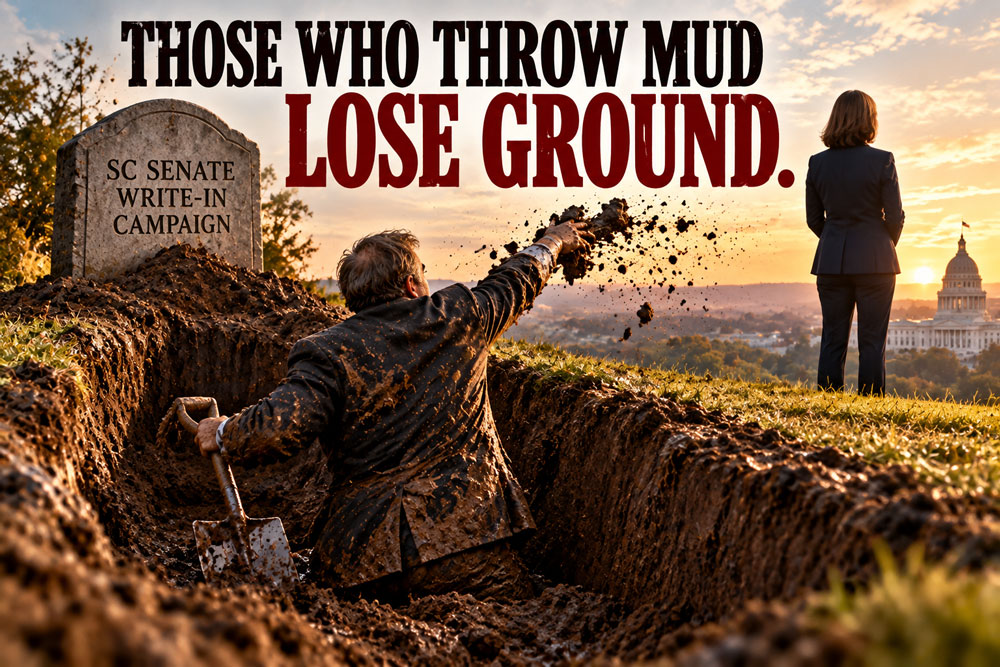
There is a difference between holding public officials accountable and using unverified personal allegations as political ammunition. When accusations without evidence against one individual are introduced into an election involving a family member, the public has every reason to question their relevance and timing.
Serious accusations deserve evidence, not political exploitation. And even if it were true, a family relationship is not proof of wrongdoing, and suspicion should never be allowed to masquerade as fact.
The timing of such attacks can also create the appearance of political desperation of a failed write-in campaign. When an electoral effort turns its attention from the candidates' records and policies toward allegations involving their relatives, it invites an uncomfortable question: Has the debate shifted from persuading voters to discrediting those associated with an opponent?
Evert’s Electables - 2026 General Election
- Details
- By Evert Headley
November 3, 2026
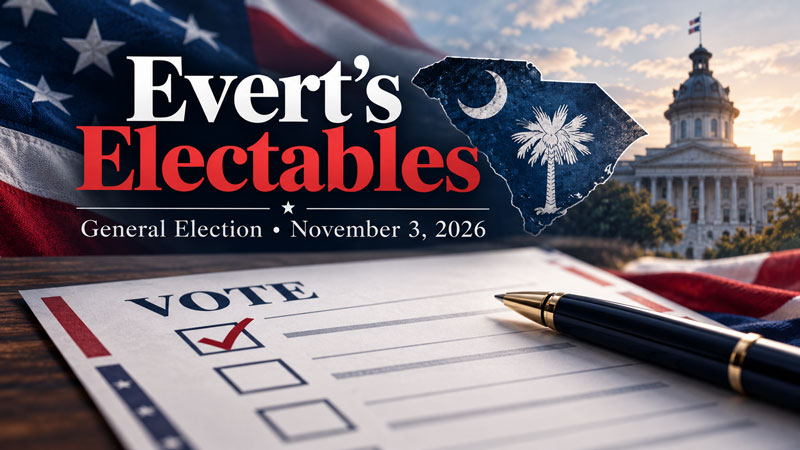
PLEASE NOTE—IMPORTANT DETAIL: do not take this flier to the polls. By law, you may take only a list of names and offices to the polling site.
- For candidates already in an office, I have been able to check voting records. My comments reflect their voting records over the course of their tenure.
- For those who have never run for office before, and who claim a position, I will state their claim, but understand I have nothing by which to verify that claim.
- Polls are open from 7 a.m. to 7 p.m. A photo ID is required to vote in South Carolina.
I usually don't post something at the front of my election paper, but I feel this year needs to have some additional information talked about. If you notice as you go through the races, you will see that I might say I endorse and will vote for someone, or I might say I would Vote for …. Sometimes the person on the ticket on the GOP side is not someone I want to vote for, well in the past I have written a name in or just abstained and let the majority make the decision and choose not to vote in that Race.
Four Steps to Improve School Choice in South Carolina
- Details
- By Brendan Connors - SC Policy Council



All South Carolina students deserve a high-quality education, and not every child thrives in their residentially zoned public school. Families have options like charter schools, private schools, or homeschooling, but these alternatives often carry additional costs.
South Carolina’s Education Scholarship Trust Fund (ESTF) program helps S.C. students who do not attend their zoned public school by providing them with access to public funds. Lawmakers fund the program proportionally to public education funding increases in the annual state budget.

Broaden the Base, Lower the Rates: Is Tax Reform Coming to S.C.?
- Details
- By Brendan Connors - SC Policy Council
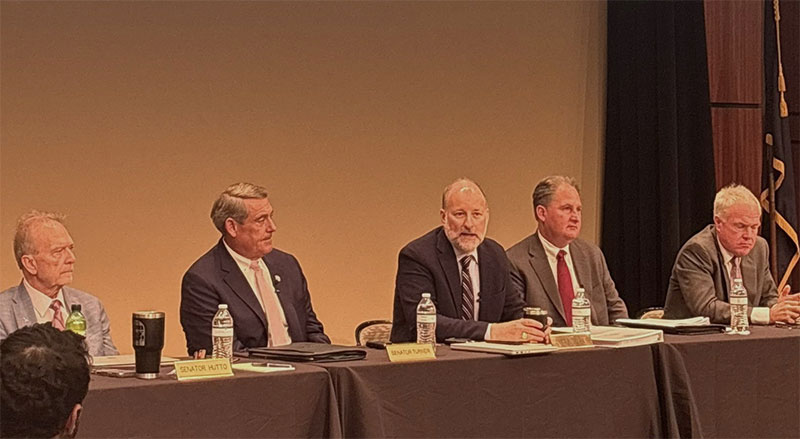
On October 7, the Common Sense Tax Reform Special Subcommittee of the Senate Finance Committee hosted a panel of tax experts to discuss good tax policy, shedding light on potential changes coming to South Carolina’s tax code.
This was the second in a series of hearings that the subcommittee, chaired by Sen. Sean Bennett, R-Dorchester, will hold over the next few months. The panel offered differing perspectives on how to structure a fair and effective tax system, but a central theme emerged: South Carolina should broaden its tax base, eliminate exemptions, and lower tax rates.
At the subcommittee’s initial meeting on September 10, Sen. Bennett identified addressing the problems created by Act 388 of 2006 as one of the subcommittee’s primary goals.

Mike Burkhold to Talk Fiscal Accountability at GCRW October Luncheon
- Details
- By Press Release

Our speaker for October is Mike Burkhold, conservative candidate for SC Comptroller General. Mike Burkhold is a Charleston-based entrepreneur; he is focused on fiscal transparency and accountability in state spending. “We’ve got a real opportunity to take the data in the state’s accounting system and create some reports and dashboards that can help every citizen, including our legislators, make better decisions about how we spend our money. There should be no mystery about where all our money goes.” Mike Burkhold to FITSNews. Burkhold’s campaign site, The Man Who Counts, publishes weekly "Follow the Money" reports analyzing public records to highlight state spending issues. https://www.burkhold.net/

Continuing the American Tradition
- Details
- By Robert Cathcart - SC Policy Council
Alexis DeTocqueville spoke of America as a nation of builders and innovators, a people who, rather than turning to government, work together to solve problems. In Volume II, Part II, Chapter 5 of Democracy in America he said:
"Americans of all ages, of all conditions, of all minds, constantly unite. Not only do they have commercial and industrial associations in which they all take part, but also they have a thousand other kinds:” religious, moral, serious ones, useless ones, very general and very particular ones, immense and very small ones; Americans associate to celebrate holidays, establish seminaries, build inns, erect churches, distribute books, send missionaries to the Antipodes; in this way they create hospitals, prisons, schools. If, finally, it is a matter of bringing a truth to light or of developing a sentiment with the support of a good example, they associate. Wherever, at the head of a new undertaking, you see in France the government, and in England, a great lord, count on seeing in the United States, an association. "

Writing In Ralph Norman Is Writing Off His Own Judgment
- Details
- By James Spurck, Publisher | Political Analysis
Ralph Norman has publicly stated his support for Darline Graham in November. His write-in supporters are asking voters to do the opposite.
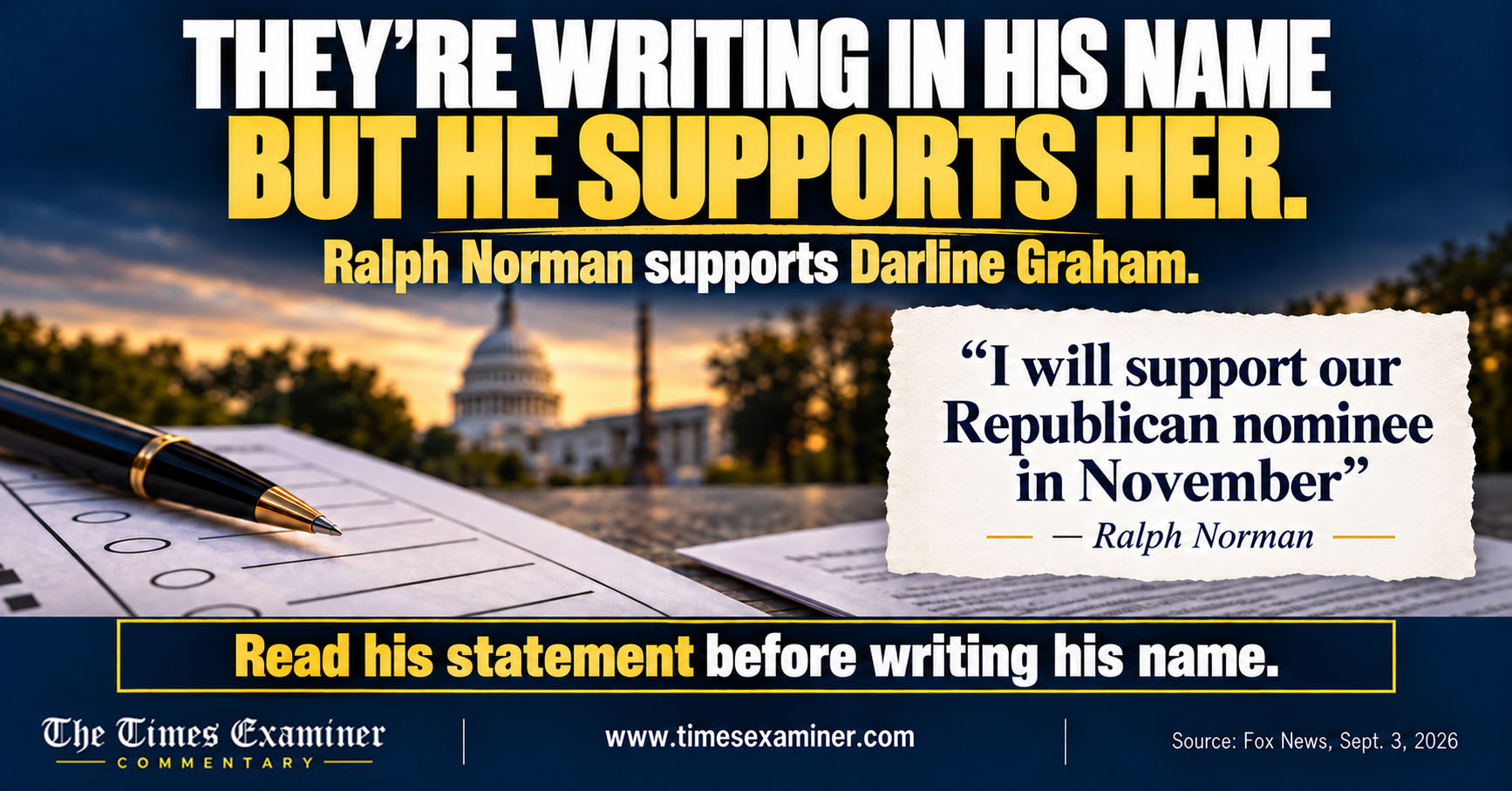
The campaign to write in Ralph Norman has a Ralph Norman problem.
Those pushing his name want conservatives to reject Darline Graham in November. Yet the very man they want us to write in has publicly pledged to support her. They are campaigning against his stated choice while campaigning in his name.
In his September 2 statement on X, Norman recognized Darline’s nomination and pledged support for the Republican nominee. His stated priority included “defeating the Democrats and protecting our conservative values.”

An Unprecedented Hearing
- Details
- By Robert Cathcart - SC Policy Council

On Monday, September 28, three panelists selected by Governor McMaster held a first of its kind hearing to give Charleston County School District Trustee Darlene Dunmeyer-Roberson the ability to refute allegations of misconduct. This was the first hearing of its type to take place, as a 2022 law authorizing the Governor to remove school board members.
This Governor and his predecessors have removed city council and county council members for similar actions in the past, but this is the first time that he has considered removing a sitting school board trustee under the new statute. The statute is broad, allowing the Governor to remove a board member for a number of different defects in their service, including chronically skipping meetings, neglecting their duties, conflicts of interest and misconduct.

Thurmond and Murkowski Won as Write-Ins. Is This Year’s Senate Race Really the Same?
- Details
- By James Spurck - Publisher | Political Analysis
Strom Thurmond and Lisa Murkowski proved that write-in campaigns can win a U.S. Senate seat. But as their victories are invoked in South Carolina’s current write-in effort, the circumstances behind those historic wins deserve a closer look.
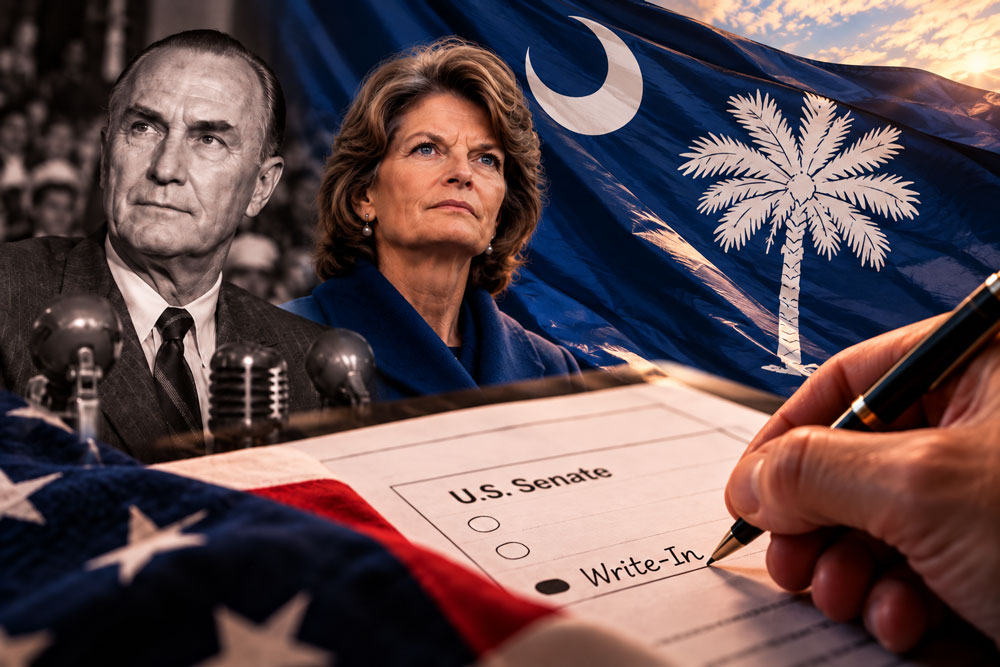
History has a funny way of becoming shorter every time it gets passed around on social media. “Strom Thurmond did it.” “Lisa Murkowski did it.” Both statements are true. Strom Thurmond won a United States Senate seat from South Carolina as a write-in candidate in 1954. Lisa Murkowski accomplished the same remarkable feat in Alaska in 2010. Today, as South Carolinians debate an independent citizen-led effort to write Congressman Ralph Norman’s name onto the ballot for U.S. Senate, those two names are increasingly offered as proof that it has been done before and can be done again. They’re right about the first part. History has settled that question. But history isn’t a collection of convenient headlines, and before we use it to guide a decision today, perhaps prudence ought to finish reading the story.

Graham Addresses Republican Women
- Details
- By Terry M. Thacker - Times Examiner Reporter
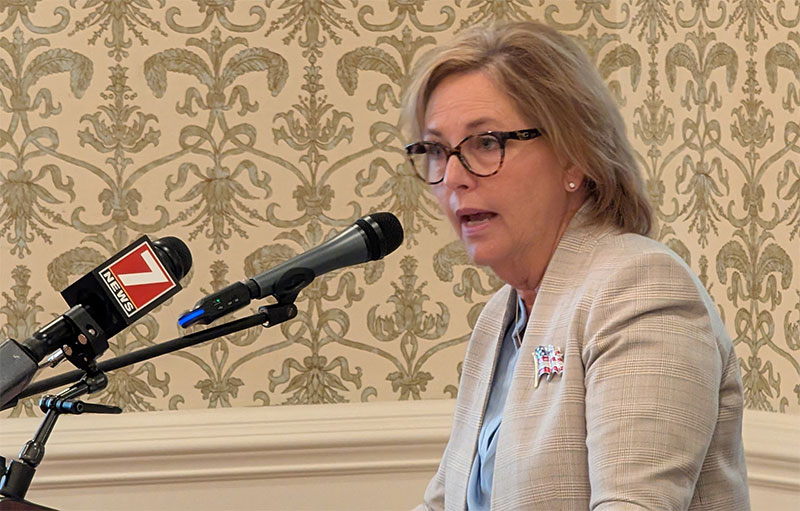
Senator Darline Graham made her campaign pitch for six more years in office this past Monday at the Poinsett Club as she addressed several dozen members of the Upstate Republican Women.
Graham, who was appointed to her position by Governor Henry McMaster to fill the remaining months of her late brother Lindsey's term in the U.S. Senate, started her brief remarks by speaking about the “brutal” campaign schedule she kept up during the special primary season.
“Up in the morning, going all day until late at night while grieving while going to my brother's services,” she related, adding, “No one can question my strength, I don't think, because I'm very strong to make it through that, but it's only by the grace of God and prayer. My faith got me through it as well.”

Civil Asset Forfeiture: Seize First, Prove Later
- Details
- By Brendan Connors - SC Policy Council

“The privileges and immunities of citizens of this State and of the United States under this Constitution shall not be abridged, nor shall any person be deprived of life, liberty, or property without due process of law, nor shall any person be denied the equal protection of the laws.” – Article I, Section 3 of the South Carolina Constitution
Our legal system rests on a simple yet powerful principle: innocent until proven guilty. A process called “civil asset forfeiture” turns that principle on its head, allowing law enforcement to permanently seize your property without a criminal conviction or even a criminal charge.
Civil asset forfeiture starts when law enforcement seizes private property including cash, vehicles, firearms, real estate, or other property they suspect is connected to criminal activity. After seizure, prosecutors initiate a civil proceeding against the property itself rather than against its owner.

NEW: Who Should Pay for South Carolina’s Data Center Growth?
- Details
- By Neil Wolin - SC Policy Council

South Carolina is facing unprecedented growth from large transformational energy customers such as expanding and newly planned data centers, and residential ratepayers across the state are concerned.
CNBC has recently reported that the Palmetto State is in the top 10 states for data center development, but notes that S.C. is not prepared to generate enough capacity.
To protect ratepayers, data centers should construct their own power generation facilities.

We Need a Codified Earmarks Process to Protect S.C. Taxpayers
- Details
- By Sam Aaron - SC Policy Council

By now, the budgetary dust has settled across the state, as the S.C. Legislature passed a general appropriations act and a supplemental appropriations act for this fiscal year allocating an additional $351 million to lawmakers’ pet projects, also known as earmarks.
An earmark typically is a budget request made by a legislator later in the budget cycle rather than a state agency at the start of the process. Some earmarks are good, such as, for example, providing additional firetrucks to a local government.
But other earmarks are essentially taxpayer-funded donations to nonprofit organizations – which clearly is a step beyond the legitimate role of government, though the nonprofits themselves usually have worthy purposes.

Get Connected and Meet the Candidates - October 20th
- Details
- By Press Release


Former Moms for Liberty Chairs in South Carolina Address Massive Departure from Organization
- Details
- By Former Moms for Liberty SC
Former South Carolina Moms for Liberty Leadership Address Departure Citing Ethical Concerns and National Disconnect

COLUMBIA, S.C. — A significant coalition of former chapter chairs and leadership members from Moms for Liberty (M4L) across South Carolina have formally announced their reasons for departure from the national organization. The group, representing various counties throughout the state, expressed deep disappointment in the current direction taken by the national organization regarding its operations in South Carolina.
The departing leaders emphasized that while they are separating from the national structure, they remain steadfastly committed to the core mission that originally drew them to the movement: protecting children, preserving parental rights, and improving the quality of education.

South Carolina Gas Tax Climbs From Near Bottom Nationally to 30th in 2026
- Details
- By James Spurck, Publisher
Palmetto State motorists pay 28.75 cents per gallon today, up 12 cents from a decade ago
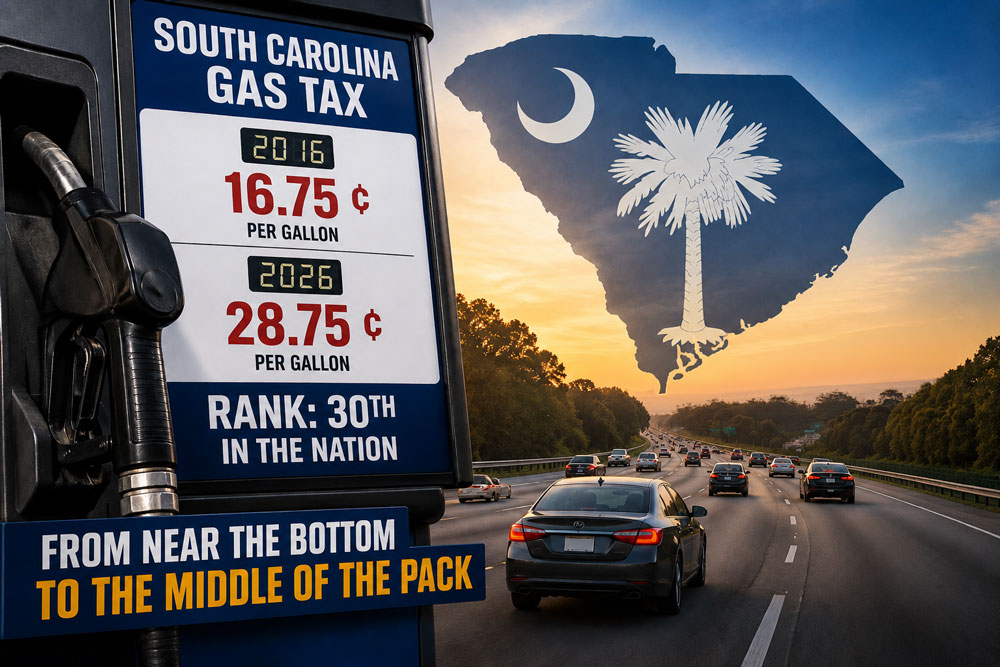
South Carolina drivers still pay less in state gasoline taxes than motorists in many parts of the country, but the Palmetto State is no longer near the bottom of the national rankings as it was a decade ago.
According to the Tax Foundation's latest figures, South Carolina's gasoline tax stands at 28.75 cents per gallon in 2026, ranking 30th highest in the nation. The state's diesel tax is also 28.75 cents per gallon.
A decade ago, the picture looked considerably different.

- Same Job. Two Résumés. Graham and Norman Make Their Case for the US Senate
- Going over budget: A routine practice for some S.C. agencies
- Richland Co. Councilman Derrek Pugh Secures Sweetheart Position with Scout Motors
- ‘A True American Original’: Lindsey Graham Funeral Rivets Capital
- Over $1 million in pothole claims made against SCDOT in FY 2025-26
Browse by the Top Tags ...