












- Ten Toes In: Why Trump Accounts Make Sense for North Carolina's Small Businesses
- Remnant Called -
- Former Moms for Liberty Chairs in South Carolina Address Massive Departure from Organization
- Same Job. Two Résumés. Graham and Norman Make Their Case for the US Senate
- Beyond the Monuments - Finding the Forgotten Grave of Dicey Langston
- The Myth of Voting for the Lesser of Two Evils
- Greenville County Holding Public Meetings on 1% Transportation Sales Tax Referendum
- AIPAC Lobbyists Grip on Congress
- Hunting Island's Lighthouse Was Built to Outsmart the Atlantic's Shifting Shoreline
- South Carolina Gas Tax Climbs From Near Bottom Nationally to 30th in 2026
- Briefing Notes from the Ukraine and Persian Gulf Wars
- Saudi Arabia’s Iran War Dilemma
- Thurmond and Murkowski Won as Write-Ins. Is This Year’s Senate Race Really the Same?
- Crime Stoppers Luncheon Remembers Greenville’s Fallen While Honoring Those Who Continue to Serve
- Trump Administration Announces $167 Million to Build Rural Care Sites, Upgrade Health Technology, and Strengthen Prevention Across South Carolina
Technology
AI Doesn't Have to Become Human to Make Us Less Human
- Details
- By Robert Maginnis - The Washington Stand

On September 5, two very different warnings about artificial intelligence appeared, raising a question more important than whether a machine will someday become conscious.
The Wall Street Journal reported on Vice President J.D. Vance’s concerns about AI’s spiritual consequences under the provocative headline, “Vance Called AI Satanic. He Struck a Chord Among Christian Republicans.” Meanwhile, New York Times columnist and Georgetown computer scientist Cal Newport asked, “How Scared Should We Be of A.I. Right Now?” Newport challenged the apocalyptic language around artificial intelligence, arguing that predictions of superintelligent machines can distract us from dangers in front of us.
At first glance, Vance and Newport approach AI from opposite directions: Vance warns of spiritual darkness in our growing dependence on machines, while Newport cautions against treating speculative superintelligence as inevitable.

Can AI’s Crazy Train Be Derailed? Christian AI Efforts Seek to Shape Emerging Tech
- Details
- By Jared Bridges - The Washington Stand
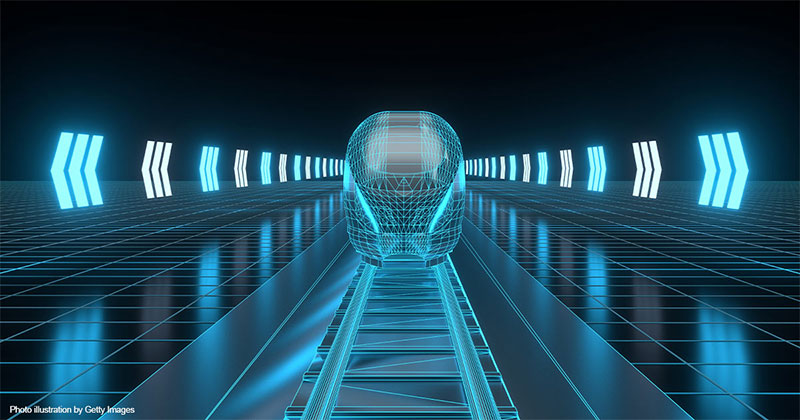
The late Ozzy Osbourne sang in 1980 about “going off the rails on a crazy train.” Forty-five years later, if anything has gone off the rails, it’s the crazy train of AI.
Just consider these recent headlines, all from the summer of 2025:
- They Asked an A.I. Chatbot Questions. The Answers Sent Them Spiraling. [New York Times]
- AI Therapist Goes Haywire, Urges User to Go on Killing Spree [Futurism]
- ChatGPT Gave Instructions for Murder, Self-Mutilation, and Devil Worship [The Atlantic]
- Creating realistic deepfakes is getting easier than ever. Fighting back may take even more AI [Associated Press]
- The Era of A.I. Propaganda Has Arrived, and America Must Act [New York Times]
- Musk says Grok chatbot was ‘manipulated’ into praising Hitler [BBC]
- New study sheds light on ChatGPT’s alarming interactions with teens [Associated Press]
- ‘I Feel Like I’m Going Crazy’: ChatGPT Fuels Delusional Spirals [Wall Street Journal]
- Meta’s flirty AI chatbot invited a retiree to New York. He never made it home. [Reuters]

Imagine the AI World
- Details
- By Anne Schlafly - Eagle Forum Chairman
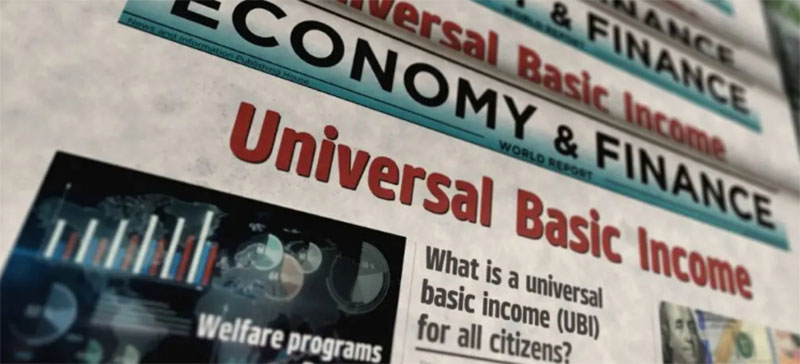
The “smart” people in Silicon Valley are repackaging an old idea in order to sugar-coat their brave new world order of artificial intelligence. The elites anticipate that, since most jobs will be obsolete with AI, there will be a scarcity of jobs, so they will need to keep the unemployed content. Like previous emperors, their solution is bread and circuses.
These tech leaders want to insulate themselves against any potential unrest with their planned AI economic disruption. They truly believe that distributing money without strings is an effective and unbureaucratic way to help struggling people. The idea is called “Universal Basic Income”, but the reality of UBI is “You Be Indolent”.

Congress Moves to Ban Apps Owned by Foreign Adversaries
- Details
- By Press Release
Time’s Up TikTok

The social media app TikTok quickly rose to fame during the pandemic lockdowns. With nowhere to go and little socialization, the newest video platform was ripe for people, especially youth, to connect with friends and find entertainment. TikTok’s boom has brought new fame and creative content, but it held a dirty little secret: it is really nothing more than spyware from the Chinese Communist Party (CCP).
In 2020, President Donald Trump’s strict policies against Chinese involvement in U.S. affairs extended to TikTok. He issued an executive order prohibiting U.S. companies from engaging in business with ByteDance, Ltd., the Chinese company that owns TikTok. A full ban of TikTok on federal devices was also enacted. Lawsuits held up the process of implementation which allowed President Joe Biden to repeal the initiative one year later. Trump still believes that TikTok is a national security problem but is concerned that if the platform were to disappear, it would send more users over to Facebook and Instagram which have had their own wealth of corrupt issues.

Department of Transportation Looking Into Disabling Cars At-Will
- Details
- By Eagle Forum
The Biden administration is trying to be a “backseat driver” by encroaching on our property and privacy rights. The Department of Transportation (DOT) has started the process of implementing a device mandate in all new cars that would spy on our driving and have the ability to disable the car. Mandating a kill switch in our vehicles would be the death of our automobile autonomy.
BMW i3 Owners Shocked By $30,000 Battery Replacement, One Quoted $71,000!
- Details
- By Stephen Rivers - Carscoops.com
First released in 2013, the i3 marked BMW‘s initial foray into the realm of mainstream electric vehicles. Primarily designed as a city car rather than a long-distance traveler, it wrapped up its U.S. journey in 2021 with approximately 45,100 units sold on this side of the pond.
Three years after its demise, the BMW i3 remains a dapper little puddle jumper that isn’t too expensive on the used-car market. Like most luxury cars though, and especially ones from established European marques, it’s not the initial cost but the lurking maintenance expenses that can catch you off guard.
Artificial Intelligence, Real Ignorance, and Our New Idolatry
- Details
- By Jared Bridges - Editor-in-Chief of The Washington Stand
Almost a decade ago, on a whim, I answered an unknown call to my cell phone. It was some sort of survey, and I for once decided to play along to see where it was going. There was something peculiar about the way the voice on the other end spoke that raised my suspicions, so I asked, “Are you a robot?” The voice chuckled and replied, “Am I that bad? I hope my boss isn’t listening to this call.” He then proceeded with the survey. Still not completely convinced, I interjected, “Sorry, but before I go on, I just need you to answer one question for me: What color is the sky?” The voice then quickly said, “Hmmm. I’ll have to research that and someone will get back to you.”

- Threats On Digital Liberty
- Yes, Your Mobile Carrier Is Probably Spying on You, But You Can Do Something About It
- Is Elon Musk Buying Twitter to Turn It Into a Free-speech Platform?
- Twitter's Plan Bee: Censorship
- Tech Mate: How Silicon Valley's China Pals Compromise America
- Fast Growing USA.Life is the #1 Most Popular Christian Social Network
- Terry Beatley's Hosea Initiative Claims Big Tech Suppressing Opposing Viewpoints Through Non-profit Gatekeeper Techsoup
Browse by the Top Tags ...