







Possible Future Trouble Spots
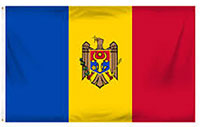
Both Moldova and Transnistria were part of the Moldavian Autonomous Soviet Socialist Republic (MASSR) until the Soviet Union broke up in 1991. They had been part of the Ukrainian SSR before 1924. Transnistria broke away from Moldova during the 1990-1991 process of Moldavan independence. There was war between Moldova and Transnistria in 1990-1992, in which about 500 civilians were killed. At that time, Ukraine backed the Transnistrians! Transnistrian independence is not officially recognized by most European Union and NATO countries. Moldovans primarily speak the Moldovan dialect of Romanian, while Transnistria, which is a long and narrow strip of land between Moldova and Ukraine, is Russian speaking and pro-Russian. The present government of Moldova leans toward European Union and Western alliances, although it is constitutionally neutral, and there is a large pro-Russian minority, which may actually be a majority of those Moldovans currently living in Moldova.
Moldova is a small land-locked country in Eastern Europe. Its estimated population in January 2025 was 2.38 million. Its official language is Romanian, but about 15 percent are Russian-speaking. Moldova is 97.4 percent Christian, and overwhelmingly Eastern Orthodox, who are 94.3 percent of the total population. The population of Moldova is 77 percent Moldavan. The major minorities are Romanians 8 percent, Ukrainians 5 percent, Gagauz (Turkish ethnic Orthodox Christians) 4 percent. and Russians about 3.4 percent. The capital and largest city of Moldova is Chisinau, population 575,000. About 46 percent of Moldova’s population is urban.
Moldova is bordered by Romania to the west, and Ukraine on the north, east, and south. Transnistria lies across the Dniester River on Moldova’s eastern border with Ukraine. Moldova occupies about two-thirds of the area once designated as Bessarabia, while the other third, bordering the Black Sea belongs to Ukraine. Bessarabia was once part of the Ottoman Empire, which was ceded to the Russian Empire following the Russo-Turkish War in 1812. It is now overwhelmingly Orthodox Christian, as are Romania, Moldova, Ukraine, and Russia.
Moldova was the poorest country in Europe with Per Capita PPP GDP of $19,591 in 2025. But Ukrainian Per Capita PPP GDP $20,999, which was the second poorest in early 2025, has probably dropped below Moldova due to heavy war damage to the Ukrainian economy. Ukraine is now overwhelmingly subsidized by American funding. Ukraine’s population has dropped 50 percent since 1990.
For a long time, Moldova has been suffering from population loss by emigration. The population has dropped by 33 percent since 1990, and could be down by 50% by 2035. More than 25 percent of Moldavans now live as expatriates around the world, and 25 percent of Moldavan GDP is expatriate related. Expatriate income is also critical to the Moldovan government, accounting for about 10 percent of Moldavan government funding.
In 2022, the average number of children per women of child-bearing age was only 1.69, well below the break-even replacement rate of 2.1. Moreover, the average age of Moldovans in Moldova is increasing. The unemployment rate in Moldova, however, is only 3.0 percent. The literacy rate is over 99.6 percent. In good times, the Moldovan economy has risen rapidly.
Another problem for Moldova is that near 100 percent of its energy comes from outside the country. Fifty percent of Moldova’s national energy company, Moldova Gaz, is owned by Russian oil and gas company, Gazprom. However, since June 2023, most of Moldova’s energy needs are being served through Romanian pipelines and suppliers with some European Union assistance.
Moldova’s major exports are agricultural products, especially wine, and also textiles, sports equipment, and computer technology support. It is being assisted in its financing by the European Union, the International Monetary Fund (IMF), and the World Bank. Inflation was up nearly 29 percent in 2022 because of Ukraine War energy price levels. It was down to 7.0 percent annually by October 2025. The World Bank estimated real GDP growth of 3.0 percent in 2024. Moldova is associated with the European Union and aspires to future full membership.
Moldova is a republic with a president, prime minister, and unicameral parliament. Maia Sandu has been president since 2015. She is pro-European Union and generally pro-Western and anti-Russian, although Moldova’s Constitutions requires neutrality. She has clearly voiced support for changing the Constitution and has essentially ignored it since her 2015 election.
Sandu was re-elected in December 2024 with 55 percent of the vote against 45 percent for pro-Russian Alexandr Stoinoglo. The election was generally considered a pro-EU and pro-Western contest with pro-Russian government policies.
However, there were some controversies. Just before the election a Moldavan court banned two pro-Russian parties from voting for 12 months. This was because of alleged Russian financing and interference. Moreover, of the 1.68 million votes cast, according to Aljazeera, 288,000 were cast by overseas diaspora voters. This is calculated at 17.5 percent of the total. According to election results, between 80 and 85 percent of these votes were for Maia Sandu. If the total diaspora vote for Sandu was just 80 percent, this means that the margin was only 50.28 percent to 49.72 percent for domestic voting in Moldovia. Furthermore, the total percent voting in the election was only 54 percent, not much for what Sandu claimed would be the most important election in Moldavan history. While 288,000 were received from around the world, Transnistrian voters were required to leave Transnistria and travel 12 miles to vote in polling places in Moldova proper. Also, according to Russian Kremlin spokesman Dmitry Peskov, Moldova provided only two voting locations and 10,000 ballots for the large Moldavan diaspora in Russia. According to Wikipedia, the Moldavan Central Electoral Commission (CEC) and the Moldavan Ministry of Foreign Affairs, there were more than 200,000 Moldavan citizens working in Russia in 2025. These are mostly construction workers in the Moscow area. There are also about 77,000 Moldovans who are Russian citizens.
Most Western accounts of the 2024 Moldavan elections are filled with accusations of Russian interference and propaganda. Yet it was obvious that Western anti-Russian propaganda was prevalent and strident. Moreover, can informed and sensible people believe that the CIA and British MI6 had no participation in the Moldavan election?
The Moldavan armed forces consist of 6,500 professional soldiers and 2,000 annual transcripts, but has 66,000 reserves. Most of its equipment is Soviet era but modern equipment is being supplied from Germany and Romania. The North Carolina National Guard has in the past conducted training with Moldovan forces.
According to Transparency International, 37 percent of Moldovans reported paying a bribe in 2010, frequently to the police. However, an anti-corruption court was established in 2023. Transparency International’s Corruption Perception Index improved from 30 out of 100 in 2016 to 43 out of 100 in 2024, a notable improvement. This brought Moldova to an above average ranking of 76th of 180 countries.
A majority of Romanians favor merging Moldova with a Greater Romania when times are more favorable, but there is little support for this in Moldova.
Transnistria
The name Transnistria means simply “Across the Dniester River.”—in this case on the eastern side of the river with Ukraine on its eastern border.
According to a Moldovan estimate in 2024, the population of Transnistria was 368,000. The principal ethnic groups represented are Russian 29 percent, Moldovan/Romanian almost 29 percent, and Ukrainians 23 percent.
The unofficial capital of Transnistria is Tiraspol with a 129,000 population. Tiraspol and Bender with a population of 91,000 are the main centers of Russian ethnic population running from 41 to 43 percent.
The current president of Transnistria is Vadim Krasnoselsky. The form of government is a strong presidency with a 42 member elected legislature.
The 1992 cease-fire agreement between Moldova and Transnistria established a peace-keeping Russian force of 1,200 in Transnistria. The Russian Duma has never agreed to withdraw them. In addition, Transnistria has armed forces and paramilitary units numbering between 4,500 and 7,500 soldiers.
About 92 percent of Transnistrians adhere to Eastern Orthodox Christianity. Another 4 percent are Roman Catholic.
The Transnistrian economy is predominantly privately owned and 80 percent of it involves steel production, electrical power production, and textile manufacturing. Per capita GDP is about 5 percent higher than Moldavan per capita GDP.
Transnistria is generally considered more authoritarian in its government than Moldova and more socially conservative. Transnistria does not recognize LGBTQ rights, same-sex unions, or same-sex marriages. Although most industry, commerce, and property is privately owned, it still has the Communist Hammer and Sickle in its National flag.
The United Nations does not recognize Transnistria as an independent nation. Only two non-member states, South Ossetia and Abkhazia recognize Transnistria. The Russian Federation often supports Transnistrian needs, but it has never recognized its independence.
It is extremely doubtful that the Russian Federation has any territorial ambitions over Transnistria, but Russian history demonstrates a strong ethnic and religious sentiment to protect Russian nationals near its borders. This was a major factor in Russian military intrusion into Ukraine in February 2022, because of Ukrainian cultural genocide escalating into genocide of the Russian ethnic population of the Donbas region of southern and eastern Ukraine. Ukraine provoked Russian action by escalating Ukrainian Army artillery attacks on Russian-ethnic civilians, especially in the city of Donetsk. Meanwhile, European Union economic sanctions against Transnistria are making life hard for ordinary people in Transnistria and exacerbating bitterness.
The European Union is becoming an economic and social bully and new Third Reich. It is beginning to elicit strong resistance from Hungary, Slovakia, the Czech Republic, Austria, and for its social bullying even Poland and Italy.
“He who sows the wind will reap the storm.”—a Moldovan proverb based on Hosea 8:7.
“If possible, so far as it depends on you, live at peace with everyone. “—Romans 12:18 NIV
 Mike Scruggs is the author of two books: The Un-Civil War: Shattering the Historical Myths; and Lessons from the Vietnam War: Truths the Media Never Told You, and over 600 articles on military history, national security, intelligent design, genealogical genetics, immigration, current political affairs, Islam, and the Middle East.