








From False Flags to Truth, Common Sense. and Hope
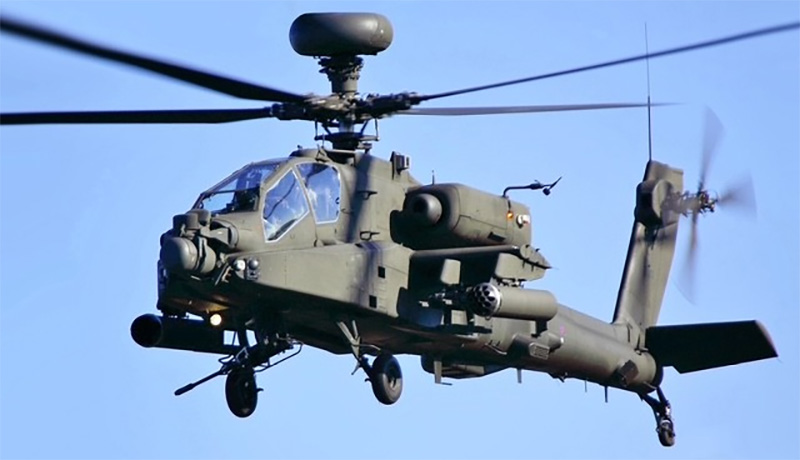
On Tuesday, June 9, President Trump announced that the Iranians had shot down an AH-64 U.S. Army Apachee helicopter off the coast of Oman near the Persian Gulf and Strait of Hormuz. The AH-64 Apache was part of the 82nd Airborne Division of the U.S. Army. Within two hours, Central Command (CENTCOM) announced that the two pilots had been rescued and were in stable condition and that the cause of the aircraft loss was under investigation. CENTCOM also revealed that the pilots were rescued by using a new uncrewed 24-foot naval drone, the Saronic Corsair, and that this was the first operational use of this high-speed naval drone.
Later Tuesday, President Trump announced on Truth Social that the AH-64 Apache had been shot down by the Iranians while patrolling the Strait of Hormuz and that this demanded a strong response by U.S. forces. The Apache helicopter loss had occurred after several weeks of a fragile ceasefire with many violation incidents. Moreover, the U.S. has suffered dozens of expensive manned combat and support aircraft losses since the February 28 attack on Iran.
Nevertheless, U.S. aircraft and missile barrages immediately began striking Iranian targets. The Iranians, as promised, returned the attacks with further escalation of targets and munitions.
The Iranians usually claim shoot-downs or damage to U.S. aircraft when it occurs, but they have not made any claim of hitting an Apache helicopter. According to an “anonymous” (and therefore highly questionable) Associated Press report, the AH-64 Apache accidentally collided with an Iranian drone. Moreover, low level helicopter flights over water are considered much more hazardous than flying over land. The AH-64 has been used against small Iranian speed-boats near the Hormuz Strait.
Former CIA analyst, Larry Johnson, has speculated that the AH-64 “shoot-own” may be a “False Flag” to justify or excuse escalating military attacks against Iran.
A False Flag attack is an attack or staged event deliberately designed to look like it was carried out by someone other than the perpetrator. Perpetrators of False Flags frequently manufacture incidents or attacks as excuses for war, military interventions, escalated or expanded military operations, propaganda campaigns, or domestic repression.
One of the most famous False Flags was the Gleiwitz incident on August 31, 1939. German SS operatives dressed in Polish uniforms staged an attack on a German Radio station and broadcasted anti-German propaganda. Hitler used this to justify the invasion of Poland the next day. This was part of a broader covert operation to convince the international community and the German people that Poland was the aggressor.
Unfortunately, the use of False Flag deceptions is widespread in Western covert operations.
President Trump expressed the feeling that the loss of the Apache gunship could not go unanswered, but he may have had other objectives in mind. Two uncertainties of the U.S. strategy in Iran are the state of both Iran’s defensive air and missile capabilities and its remaining offensive missile and drone capabilities. More intelligence on Iran’s defensive and offensive capabilities was needed before committing to a major American attack. The best way to get it was to test them under selected smaller attacks. The escalated American attacks after the Apache announcement may have been probing for critical intelligence. After all, Iran now has two very strong allies in Russia and China that are supplying the latest intelligence and offensive and defensive weaponry. Unexpected Iranian defensive or offensive capabilities could lead to an embarrassing defeat or humiliation.
University of Chiago Professor John Mearsheimer, a West Point graduate and former Air Force officer, has expressed a broader possibility. Trump knows that the Iran War must be ended before its economics create a very serious recession or even disastrous economic depression. The serious recession/depression train will be crashing into the U.S. economy within weeks. This is also likely to have disastrous consequences for Republican control of the House and Senate.
Trump may be giving a Mr. Tough Guy Show before he must quietly and as invisibly as possible compromise with the reality that Iran cannot be defeated without wrecking the U.S. economy and exhausting its military and international standing in the world.
This may be correlated with Trump’s Thursday, June 11, switch from threatening to bomb Iran into oblivion—which he probably now knows is not a reasonable probability—to making some concessions with reality and common sense necessary for continued American prosperity and national security.
Moreover, there appears to be an actual path and means to a ceasefire and peace based on reality rather than insane hubris. I have been skeptical about this, but judging on what I hear from informed Iranians, the chance for a genuine ceasefire may be over 50%. However, it could be easily derailed, and there are powerful people and organizations who want to derail it.
Iran’s most recent big-picture strategy has been to respond only when attacked, but to escalate the scale, weapons, and targets if attacked. Meanwhile, there are many lower level departures from the big-picture.
The Trump Administration and subservient Neocon media like Fox generally try to give the impression that they hold all the cards in the War. More analytical intelligence and media sources indicate this is far from true, especially with Russia and China supplying intelligence and advanced weapons. In addition, other countries like Pakistan are providing Iran considerable logistic help and alternatives.
The Times of India and the English language Indian news media Mirror Now reported that Iranian retaliatory ballistic missile strikes on U.S. linked Al-Azraq airbase in Jordan hit hangers housing U.S. F-15s, F16s, and F-35s and command and control centers. Indian media also reported that Iranian defense missiles near the Hormuz Strait intercepted four U.S. Tomahawk missiles attacking the Hormuz port city of Bandar Abbas.
Many experienced retired military and CIA analysts—probably a near consensus—believe that Iran has greater offensive missile and drone strength than ever. Moreover, its arsenals and launching-platforms are protected under granite mountains. Its defensive missile systems have been demonstrably improved by Russian and Chinese technology, satellites, and equipment. Israel’s defensive missile system has proved incapable of stopping at-will hypersonic Iranian missile attacks, especially when accompanied by huge drone swarms, and its limited stockpile of defensive missiles. cannot be quickly replaced. See MIT professor Ted Postol comments on limited Patriot and THAAD missile capabilities. Prof. Ted Postol: How Iran Blinded US Defenses in 10 Minutes The limited capability of Patriot missile systems against hypersonic ballistic Russian missiles is also evident in Ukraine. Moreover, the Ukraine war and the Iran War have depleted U.S. military capabilities, and U.S. military-industrial capabilities are not presently capable of rapid replenishment of critical arms needs. Still more relevant, many of our most sophisticated technology and weapons systems require rare-earth minerals. According to Fotune, 3-11-2026, China now controls 70% of rare earth mining production and 90% of rare earth processing and refining. According to the U.S. Defense Department nearly 78% of high-tech American defense weapons require rare earth elements. This includes the F-35 engine, and many other missile, drone, avionic, and guidance systems.
Many if not all the nations of the Persian Gulf are beginning to realize that the U.S. is not capable of protecting them from Iran. This was demonstrated on the very same day, February 28, 2026, that the U.S. attacked Iran, thinking that a decapitation strike would finish Iran and assure Israel of its territorial ambitions and regional military dominance.
According to Reuters on June 13, the UAE holds about $20 billion of Iranian frozen funds in its banks. According to one of Reuters’ sources, $3 billion has already been transferred back to Iran, and another $10 billion is part of the agreement for an imminent ceasefire, perhaps connected to President Trump’s pending deal. The UAE Foreign Office denied this today, June 14.
Qatar has suffered terrible economic losses so far in the war and is leaning toward a peaceful agreement with Iran. Saudi Arabia is leaning the same way. Oman has always leaned toward cooperation with Iran. Bahrain has suffered terribly because it is the headquarters of the US Navy’s Fifth Fleet and the regional Navy headquarters for the Middle East. Centcom has recently moved some administrative functions out of Bahrain because of its vulnerability to Iranian missile attacks. Bahrain, which has a high percentage of Shia Muslims of Iranian background, may also lean toward future cooperation with Iran.
U.S. Political Risks of Iran War
According to a Pew Research analysis of the 2024 Presidential Election, 81% of white Evangelical Protestants voted for Trump. His second highest support at 70% came from a grouping that was probably dominated by Hispanic Evangelical Protestants. White non-Hispanic Catholics gave 63% of their vote to Trump. White non-Evangelical Protestants gave Trump 58% of their vote. We can surmise from this that the Christian vote and especially the Evangelical vote is extremely important to Trump. Moreover, the Pew Analysis revealed that House Republican races were dependent on the same four groups with little degradation from the Trump vote. In fact, 81% of Evangelical White Protestants also voted for Republican House candidates.
A new Reuters/Ipsos poll conducted June 3-8 revealed that 54% of Evangelical Christians believed that Trump’s military actions in Iran were not in line with their understanding of Christian values. However, many Christian poll respondents believed there were Biblical reasons to support the war. I am not going to attempt to argue the points, but one is based on moral and ethical considerations, and the other is based on interpretations of Biblical promises. There is little chance outside of a near return of Jesus Christ that these differences will be resolved before the 2026 Congressional Elections.
The bottom line is that a divided Christian vote is for the Republicans like ramming an unexpected iceberg at Titanic speed. Congress seems unaware, poorly informed on both the war and its Christian ethical and Biblical interpretation context, and unable to change course.
A major obstacle to their changing course is their reliance on special interest money that favors the war. The most visible of these is AIPAC (American Israel Political Action Committee). AIPAC operates both the AIPAC PAC and the United Democracy Project, a Super PAC that spends unlimited amounts of advertising money and other expenses help to elect AIPAC favored candidates and to defeat those who oppose AIPAC influence in Congress.
A series of Economist/UGov polls released June 8 indicated that 62% of respondents disapproved of Trump’s actions in the Iran War and 29% approved. Only 14% strongly approved, while 49% strongly disapproved.
The Rasmussen Daily Presidential Tracking Poll for Friday, June 12, had Trump at 41% approval and 57% disapproval. The dramatic situation, however, is shown by a mere 23% giving Trump strong approval, while 47% strongly disapprove.
At about 7:00 PM Sunday, June 14, President Trump announced that a ceasefire agreement between the United States and Iran had been approved and would be signed in Geneva on June 19. The terms have not been released.
There are undoubtedly elements of this agreement that will not be welcomed by AIPAC, the current Israeli government, and Imperialist factions in Congress and the media, but it is a right step toward truth, common sense, prosperity, and genuine national security.
 Mike Scruggs is the author of two books: The Un-Civil War: Shattering the Historical Myths; and Lessons from the Vietnam War: Truths the Media Never Told You, and over 600 articles on military history, national security, intelligent design, genealogical genetics, immigration, current political affairs, Islam, and the Middle East.