












Ongoing litigation now involves a SLED investigation, prosecutorial review, and state-level involvement
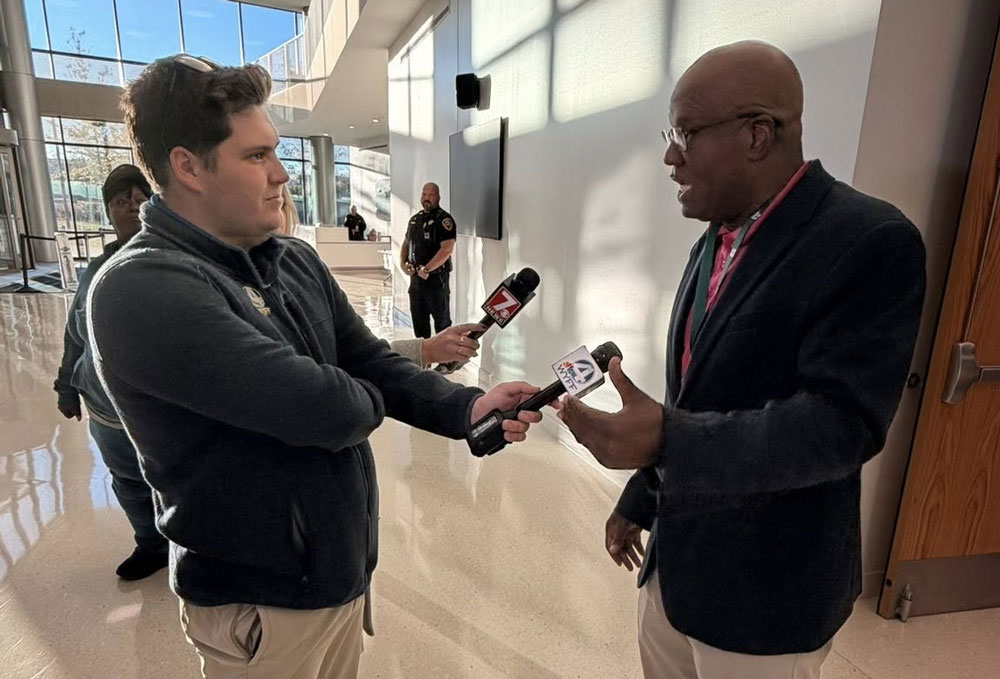
A March 25 hearing in Greenville County Court of Common Pleas brought the residency dispute involving Councilman Ennis Fant into sharper focus, as attorneys presented a series of motions tied to both the underlying claim and access to evidence.
According to information from those present in the courtroom, the hearing involved as many as nine separate motions that were argued between the plaintiff and multiple defendants, including Fant. The volume of motions reflects how the case has expanded beyond a single residency question into a broader legal contest over evidence, procedure, and the scope of the court’s review.
Arguments during the hearing addressed disputes over discovery, including efforts to obtain materials connected to the South Carolina Law Enforcement Division investigation into Fant’s residency, as well as records the plaintiff contends would help establish where Fant resides. Those records include bank documents, utility records, and information from the South Carolina Department of Revenue. Attorneys argued that some of those materials, including records reviewed by prosecutors, had not been produced, placing access to key evidence at the center of the dispute as the case moves forward.
Attorneys also argued procedural issues that could shape how the case moves forward, including what evidence will ultimately be admissible and how the residency question will be evaluated by the court.
The number and scope of motions presented indicate that both sides are actively working to define the legal boundaries of the case before it proceeds further.
While the court heard extensive argument, any rulings from the bench have not yet been fully reflected in written orders available through the public record.
From Residency Challenge to Multi-Layered Dispute
The motions argued during the March 25 hearing stem from a civil complaint filed by Greenville resident Bruce Wilson, now pending before the Thirteenth Judicial Circuit Court of Common Pleas under case number 2025-CP-23-07582, where the central issue remains whether Fant legally resides in District 25.
The lawsuit names Fant in his official capacity as the District 25 councilman, along with the Greenville County Voter Registration and Election Commission and Greenville County itself as defendants. While residency disputes are not uncommon in local government, court filings in this case show a broader set of legal questions developing around the underlying claim.
The inclusion of the Greenville County Voter Registration and Election Commission and Greenville County reflects their roles in administering elections and maintaining official records related to residency and voter registration. In cases challenging a candidate’s eligibility, these entities are often included because they are responsible for overseeing district qualifications and would be directly affected by any court ruling on residency status.
SLED Investigation and Prosecutorial Review
What began as a question of residency has since expanded beyond a routine eligibility challenge. As the case developed, it drew the attention of law enforcement and prosecutors, bringing additional scrutiny to the underlying facts and raising the possibility of legal consequences beyond the civil dispute.
Filings submitted in March 2026 show that the expanding scope of the case includes an investigation by the South Carolina Law Enforcement Division. The plaintiff issued a subpoena seeking a full and unredacted SLED report identified as File Number 34-24-0061, along with related communications concerning Fant’s residency.
The request extends beyond the report to include emails, messages, and internal discussions tied to the investigation.
That request has triggered a legal dispute with the Thirteenth Circuit Solicitor’s Office, which reviewed the SLED findings to determine whether criminal charges should be pursued. The Solicitor’s Office, now led by Solicitor Cindy Crick, confirmed in its filing that it conducted an internal evaluation of the investigation, including legal analysis of whether prosecution was warranted.
Dispute Over Access to Government Records
The Solicitor’s Office has declined to produce portions of its internal materials, arguing that those records are protected under the attorney work product doctrine.
In filings opposing a motion to compel, the office maintains that documents created during its review reflect internal legal reasoning and prosecutorial deliberation and therefore are not subject to disclosure. The materials at issue include both factual summaries and internal analysis, which courts traditionally treat as protected.
The office further argues that compelling such materials in a civil case could expose internal decision-making and hinder future law enforcement reviews.
At the same time, the filings confirm that prosecutors did evaluate whether the facts surrounding Fant’s residency could support criminal charges, even though the outcome of that evaluation has not been disclosed.
State-Level Review and Parallel Legal Tracks
Subsequent communication referenced in the filings indicates that the matter was referred for further review beyond the local level. Separate correspondence from the South Carolina Attorney General’s Office confirms that the matter was formally accepted for prosecutorial handling and assigned to Assistant Attorney General John Meadors to evaluate the case and make prosecutorial decisions.
While the Attorney General’s Office has taken on review of potential criminal implications, the current court proceedings remain part of a civil lawsuit focused on residency. That case continues in Greenville County, where the Solicitor’s Office remains involved in responding to subpoenas and defending its prior review of the SLED investigation. Any criminal charges, if pursued, would proceed separately under the authority of the South Carolina Attorney General’s Office.
Timeline of a Growing Dispute
Public attention to the issue began months earlier. On October 30, 2025, the matter was scheduled to come before the Greenville County Voter Registration and Election Commission during a hearing held at County Council chambers. However, the proceeding ended shortly after it began when complainant Derrick Quarles withdrew his motion, citing the inability to present key evidence without SLED agents present to testify.
Following the brief proceeding, Quarles spoke with reporters outside the chambers, stating that he had obtained a SLED investigative report that he said concluded Fant did not reside in District 25 and recommended potential charges including perjury, election fraud, and misconduct in office. He explained that he could not formally introduce the report during the hearing because, without SLED present, it would be considered hearsay under the Commission’s rules.
Quarles further indicated that the report had been submitted to the Thirteenth Circuit Solicitor’s Office, where it was reviewed but not advanced for prosecution, citing concerns about securing a conviction. He said he intended to refile the complaint and seek to have SLED formally participate in future proceedings.
Fant, also speaking after the proceeding, disputed the claims and maintained that he meets the legal requirements for residency. He stated that he has established domicile in District 25 for years and argued that prior challenges to his eligibility had already been rejected through multiple venues, including earlier hearings and court review.
The exchange highlighted a dispute that had already moved beyond a routine eligibility question, with references to law enforcement findings, prosecutorial review, and repeated legal challenges. Subsequent developments in early 2026, including court filings and involvement by the South Carolina Attorney General’s Office, reflect how the matter continued to escalate beyond the initial complaint by Quarles.
Why the Case Carries Broader Implications
Residency requirements in South Carolina are intended to ensure that elected officials live within the districts they represent. Courts typically weigh physical presence, intent, voter registration, and property records when evaluating such claims.
What distinguishes this case is the number of legal layers now involved. The dispute has moved from a civil complaint to a confirmed SLED investigation, followed by prosecutorial review at the local level, and now formal involvement by the Attorney General’s Office.
At the center of the current phase of litigation is the court’s pending decision on whether to compel disclosure of additional records. That ruling could determine how much of the investigative process becomes public and how the case proceeds.
For now, the factual question of where Fant resides remains for the court to decide. But the path this case has taken already signals something larger. What began as a local residency challenge has moved through investigators, prosecutors, and now into the hands of the state’s top legal authority. However it concludes, the outcome may not only determine one councilman’s eligibility, but how closely the system examines those who hold public office.