







- Ten Toes In: Why Trump Accounts Make Sense for North Carolina's Small Businesses
- Remnant Called -
- Former Moms for Liberty Chairs in South Carolina Address Massive Departure from Organization
- Same Job. Two Résumés. Graham and Norman Make Their Case for the US Senate
- Beyond the Monuments - Finding the Forgotten Grave of Dicey Langston
- Greenville County Holding Public Meetings on 1% Transportation Sales Tax Referendum
- The Myth of Voting for the Lesser of Two Evils
- AIPAC Lobbyists Grip on Congress
- Hunting Island's Lighthouse Was Built to Outsmart the Atlantic's Shifting Shoreline
- South Carolina Gas Tax Climbs From Near Bottom Nationally to 30th in 2026
- Equipping the Persecuted: Weekend Terror Alert Helped Avert Wider Massacre as Slaughter of Christians Continues to Ravage Nigeria Unchecked by Government
- Thurmond and Murkowski Won as Write-Ins. Is This Year’s Senate Race Really the Same?
- Briefing Notes from the Ukraine and Persian Gulf Wars
- Crime Stoppers Luncheon Remembers Greenville’s Fallen While Honoring Those Who Continue to Serve
- Trump Administration Announces $167 Million to Build Rural Care Sites, Upgrade Health Technology, and Strengthen Prevention Across South Carolina
More Quotes on the Civil War
- Details
- By Mike Scruggs
- Category: Mike Scruggs' Column
Secession, Tariffs, Sectionalism, Southern Rights, Slavery, Truth, Defeated Valor
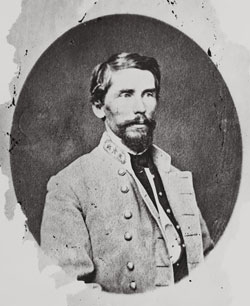
One of my favorite quotes revealing the real causes of Southern secessions from the United States, beginning with South Carolina on December 20, 1860, and leading to six other secessions and Confederate artillery batteries in Charleston bombarding Union held Fort Sumter on April 12, 1861, is an early November editorial in the Charleston Mercury. On November 4, 1860, just two days before Lincoln’s election in November 6, the Charleston Mercury summed up the feeling of South Carolina on the impending national crisis:
“The real causes of dissatisfaction in the South with the North, are in the unjust taxation and expenditure of the taxes by the Government of the United States, and in the revolution the North has effected in this government, from a confederated republic to a national sectional despotism.”

Ten Quotes from the Civil War
- Details
- By Mike Scruggs
- Category: Mike Scruggs' Column

Writing in December of 1861 in a London weekly publication, the famous English author, Charles Dickens, who was a strong opponent of slavery, said these things about the war going on in America:
“The Northern onslaught upon slavery is no more than a piece of specious humbug disguised to conceal its desire for economic control of the United States.”
Karl Marx, like most European socialists of the time, favored the North. In an 1861 article published in England, he articulated very well what the major British newspapers, the Times, the Economist, and Saturday Review, had been saying:
“The war between the North and South is a tariff war. The war, is further, not for any principle, does not touch the question of slavery, and in fact turns on the Northern lust for power.”

Greenland Defense and Arctic Economic Development
- Details
- By Mike Scruggs
- Category: Mike Scruggs' Column
From Erik the Red to Pituffik Space Base
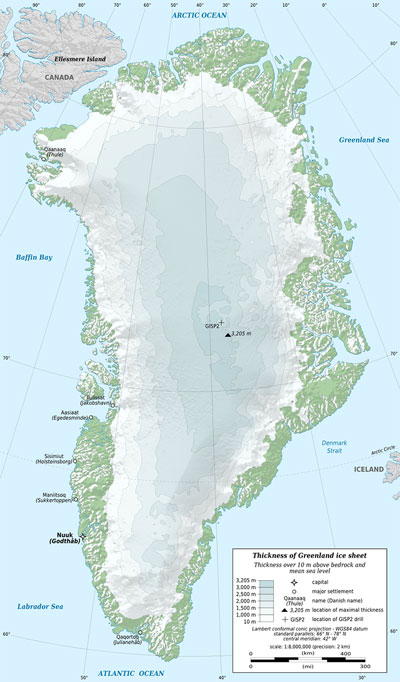
If you look at a global map centered on the North Pole, you will notice that Russia has the largest exposure to the Arctic Ocean, nearly 50 percent. Advancing technology or warmer climate could result in more viable Arctic seaports and trade passages to both the North Atlantic and Northwest Pacific, cutting down the time and possibly the cost of shipping goods. The United States, especially Alaska, Canada, and the Scandinavian countries could also benefit from such expanded, shorter, and cheaper trade routes.
Moreover, according to the U.S. Energy Information Administration, resource basins within the Arctic Circle (North of 66.5 Latitude) contain 13 percent of the world’s undiscovered oil and 30 percent of the world’s undiscovered natural gas. Currently, developing these resources would cost 50 to 100 percent more than in Texas, but technologies to reduce costs are developing rapidly. The Russians and others are pouring investments into Arctic infrastructure and extraction technology. The Arctic resource basins are also rich in phosphate, bauxite (for aluminum), iron ore, copper, nickel, diamonds, gold, zinc, and palladium.

The Iranian Dilemma
- Details
- By Mike Scruggs
- Category: Mike Scruggs' Column
Political and Military Tensions in West Asia

The population of Iran was 92.5 million in 2025. It has the 17th largest population among the nations of the world, and is also the 17th largest in geographical area. It was known as Persia until 1935. According to the Library of Congress, only 65 percent of its population is ethnically Persian. Some estimates have Iran at only 51 percent Persian. The principal minorities, according to the Library of Congress, are Azerbaijanis, 16 percent; Kurds, 7 percent; Lurs 6 percent; Arabs, 2 percent; and Balochis, 2 percent. Others include Turkic tribes, Armenians, Assyrians, and Georgians. There are also many Afghan refugees. Among the Armenians, Assyrians, and Georgians are between 250,000 and 370,000 Christians. However, the vast majority of all Iranians speak the Persian language.

Oreshnik Number 2
- Details
- By Mike Scruggs
- Category: Mike Scruggs' Column
The Russian Hypersonic Missile and Its Message

On January 8, the Russians fired an Oreshnik hypersonic ballistic missile at a largely underground natural gas storage facility near Lviv, in western Ukraine, from central Russia. It is the second Oreshnik that has been used in the Ukraine-NATO Proxy War against Russia. The Oreshnik is now in serial production. The first experimental test of the Oreshnik against Ukraine was on November 21, 2024, against an industrial aerospace military plant near Dnipro, Ukraine’s fourth largest city, on the eastern bank of the Dnieper River.

 Mike Scruggs is the author of two books: The Un-Civil War: Shattering the Historical Myths; and Lessons from the Vietnam War: Truths the Media Never Told You, and over 600 articles on military history, national security, intelligent design, genealogical genetics, immigration, current political affairs, Islam, and the Middle East.
He holds a BS degree from the University of Georgia and an MBA from Stanford University. A former USAF intelligence officer and Air Commando, he is a decorated combat veteran of the Vietnam War, and holds the Distinguished Flying Cross, Purple Heart, and Air Medal. He is a retired First Vice President for a major national financial services firm and former Chairman of the Board of a classical Christian school.
Click the website below to order books. http://www.universalmediainc.org/books.htm.
Browse by the Top Tags ...