












$106,000 sanctions dispute fuels broader debate over government authority and the public’s right to challenge local decisions in court
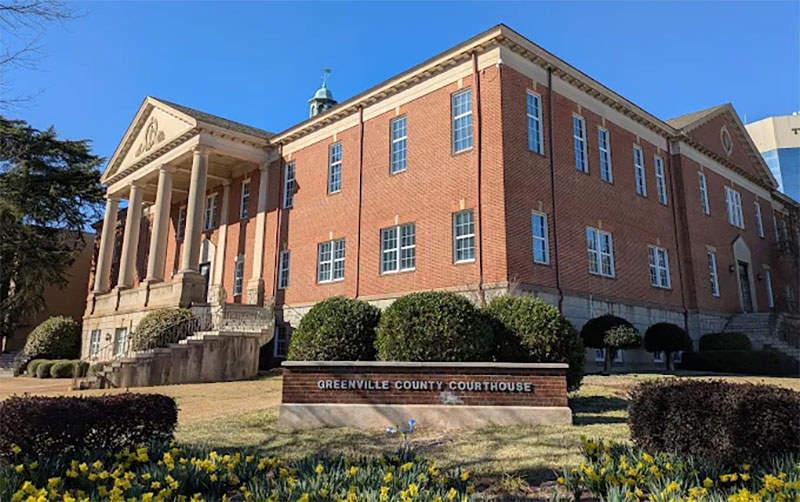
A lawsuit challenging Greenville County’s expansion of the Metropolitan Sewer Subdistrict has moved from a debate over planning law to a six-figure dispute over whether the plaintiffs should be ordered to pay the County’s legal fees.
The underlying case was dismissed last fall. What remains unresolved is whether the lawsuit was merely unsuccessful or rises to the level of legal frivolity.
The distinction now carries a potential price tag of $106,164.48.
From Sewer Expansion to Courtroom Challenge
On February 1, 2025, James Sheets, Dragon Holdings, LLC, and a John Doe plaintiff filed suit in Greenville County Circuit Court challenging Greenville County Ordinance No. 5667. The ordinance expanded the boundaries of the Metropolitan Sewer Subdistrict, opening additional areas for potential sewer service.
The ordinance itself states that it was enacted pursuant to Title 6, Chapter 11 of the South Carolina Code, commonly referred to as the Special Purpose District Boundary Laws. It specifically cites Sections § 6-11-420 and § 6-11-430 as its statutory authority and outlines the procedural steps required under that framework, including petition by the Metropolitan Sewer Subdistrict Commission and a public hearing before County Council.
The plaintiffs, however, argued that compliance with the Special Purpose District statute did not eliminate separate obligations under state planning law. They contended the County violated provisions of the South Carolina Local Government Comprehensive Planning Enabling Act by failing to submit the expansion for Planning Commission review before adoption.
The lawsuit asked the court to declare the ordinance unlawful and to prevent the County from enforcing it, arguing that it conflicted with the County’s comprehensive plan and state planning law.
~~~~~~~~~~~~~~
STAY INFORMED!
Enjoy reporting like this?
Subscribe to The Times Examiner Weekly Briefing and receive the most important Upstate stories each week.
~~~~~~~~~~~~~~
The South Carolina Local Government Comprehensive Planning Enabling Act establishes a framework requiring counties to adopt and maintain comprehensive plans and to route certain land use and zoning matters through their Planning Commissions for review prior to adoption.
Opponents of the sewer expansion argue that extending service boundaries influences development patterns and growth intensity and therefore should have triggered that planning review process.
In subsequent filings, the plaintiffs framed the issue more narrowly as a statutory interpretation question. They argued that S.C. Code § 6-29-540 operates as a condition precedent requiring Planning Commission review of certain public projects for consistency with the comprehensive plan before County Council may authorize them. In their view, compliance with the Special Purpose District boundary statute did not eliminate separate procedural obligations under the state’s planning framework.
The Statutory Deadline Dispute
The plaintiffs advanced that interpretation in court, contending that the ordinance conflicted with state planning law. The court, however, did not rule on whether the Planning Enabling Act applied or whether the County complied with it.
Instead, the judge concluded that challenges to special-purpose district boundary changes are governed by a separate statute containing a twenty-day filing window and dismissed the case as untimely without reaching the substantive planning question. As a result, no judicial determination was made regarding whether the ordinance violated the Planning Act.
The dismissal left unresolved the broader policy question of how the planning statute interacts with special-purpose district boundary law.
That unresolved interaction lies at the center of the plaintiffs’ argument. They contend that the Special Purpose District statute governs how boundaries are expanded, while the Planning Enabling Act governs whether certain infrastructure decisions must first be reviewed for consistency with adopted land use policy. The court’s dismissal did not resolve which statute controls when the two overlap.
In proposed amended pleadings, the plaintiffs also sought to challenge earlier county ordinances affecting the structure and authority of the Planning Commission. The court declined to allow amendment, and those claims were not adjudicated.
Following dismissal, the plaintiffs filed additional motions seeking relief from the court’s ruling, including requests to revisit the dismissal and to recuse the presiding judge. The court denied those motions, leaving the dismissal in place.
Greenville County responded not only on the substance of the planning argument but on procedural grounds. The County asserted that challenges to changes in special-purpose district boundaries are governed by South Carolina Code § 6-11-480, which contains a strict twenty-day filing deadline following publication of notice. County Council voted to adopt Ordinance 5667 on December 3, 2024, following its required readings and public hearing.
“The case now turns on where the line is drawn between accountability and liability.”
The County raised the deadline issue early in the litigation and moved to dismiss the complaint on that basis. The case nevertheless proceeded through additional briefing and motions before the court ultimately ruled in September.
The ordinance reflects that it received first reading on September 3, 2024, second reading and a public hearing on November 5, 2024, and third reading and final enactment on December 3, 2024. Under state law governing special-purpose district boundary changes, the deadline to challenge such an ordinance runs from the date of its public notice publication, which occurred on December 26, 2024, and January 2, 2025. The lawsuit was filed on February 1, 2025.
The County argued the lawsuit was filed too late under the strict twenty-day deadline set by state law and further contended that the plaintiffs lacked standing to bring the claim.
The plaintiffs countered that their challenge arose under the Planning Enabling Act, which provides a sixty-day window for certain zoning-related challenges. They maintained that the case involved the interaction of two statutory schemes and that the planning statute should control.
The Court’s September Order
On September 5, 2025, the Court of Common Pleas dismissed the lawsuit with prejudice. The order concluded that the action was filed outside the twenty-day statutory window contained in § 6-11-480 and further held that the plaintiffs lacked standing to pursue the claim. The standing determination provided an independent basis for dismissal, meaning the court found the case could not proceed even if it had been filed within the statutory deadline.
In dismissing for lack of standing, the court determined that the plaintiffs had not demonstrated a specific, legally protected injury sufficient to bring the claim, independent of the filing deadline issue.
The dismissal order does not use the word “frivolous.” It does not reference Rule 11. It does not impose sanctions. It does not make an express finding of bad faith. Instead, it resolves the matter on procedural and jurisdictional grounds.
The court has not yet made any determination regarding sanctions, which will be considered at the pending hearing. That clarification narrows the dispute to a single legal question: whether the dismissed lawsuit meets the legal threshold for sanctions.
The $106,000 Question
Greenville County filed a motion for sanctions on April 18, 2025, while the case was still pending. The motion seeks recovery of attorney fees and costs under Rule 11 of the South Carolina Rules of Civil Procedure and the South Carolina Frivolous Civil Proceedings Sanctions Act.
According to affidavits filed December 3, 2025, the County’s outside counsel submitted detailed billing records reflecting 232.9 total hours of legal work. The billing records show multiple attorneys and staff members worked on the case at varying hourly rates. Senior counsel billed at $585 per hour, while other attorneys billed at rates including $465, $365, and $265 per hour. Paralegal time was billed at a lower hourly rate. The total amount requested in fees and costs is $106,164.48.
The County argues that the twenty-day filing deadline is clear and strictly enforced under South Carolina law. According to its memorandum, plaintiffs were informed early in the litigation that the action was time-barred under § 6-11-480 but declined to amend or withdraw the complaint. In the County’s view, continuing to litigate after notice of the alleged defect forced taxpayers to absorb substantial legal expense in defending a claim it maintains could not succeed as a matter of law.
In more recent filings submitted ahead of the hearing, County attorneys also argued that certain litigation conduct during the case, including accusations of judicial bias and impropriety contained in court filings, independently supports sanctions under Rule 11. The County contends that these statements attacked the integrity of the court and opposing counsel and required additional responses from defense attorneys, thereby increasing the cost of the litigation.
“The planning question was never decided on its merits.”
The County characterizes the requested sanctions as compensatory rather than punitive, framing the motion as an effort to reimburse taxpayers for legal expenses rather than to penalize the plaintiffs. The argument is that taxpayers should not bear the financial burden of defending legally defective lawsuits.
The plaintiffs dispute that characterization. In their filings and public statements, they argue that the sanctions request operates as a deterrent and carries punitive consequences regardless of how it is labeled. A hearing on the County’s motion for sanctions is scheduled for Thursday, March 5, 2026, at 11:30 a.m. at the Greenville County Courthouse, 305 East North Street, before Judge G. D. Morgan, Jr., of the Greenville County Court of Common Pleas.
At that hearing, the judge will not revisit whether the sewer ordinance was valid. Instead, the court will decide whether the lawsuit itself was legally frivolous under state law. The decision whether to impose sanctions rests solely with the court. County Council does not determine whether the motion proceeds or whether fees are awarded.
In other words, the question is not simply whether the plaintiffs lost, but whether the case was so lacking in legal basis that the plaintiffs should be required to reimburse the County for some or all of the $106,164.48 in attorney fees being requested.
The Plaintiffs’ Response
The plaintiffs oppose sanctions on several grounds. They argue that the lawsuit presented a legitimate statutory interpretation question concerning the interplay between the Planning Enabling Act and the special purpose district statute. They contend no appellate court has squarely resolved that precise interaction and that advancing a novel legal argument does not constitute frivolous conduct.
They further note that the dismissal order itself did not characterize the case as frivolous or brought in bad faith. Dismissal for untimeliness, they argue, is not equivalent to a finding that the claim lacked any reasonable legal basis.
The plaintiffs argue the court lost jurisdiction to impose sanctions after entry of its final order, contending that the County failed to properly preserve the sanctions issue through a timely post-trial motion under Rule 59(e). If accepted, that procedural argument could prevent the court from reaching the merits of the sanctions request.
Underlying their opposition is a broader concern that imposing six-figure sanctions in a public interest planning dispute could discourage citizens from challenging government actions in the future.
A Broader Civic Debate
The dispute has extended beyond legal briefs. Public commentary has urged County Council to intervene, while County officials have expressed concern about attempts to exert political pressure in an ongoing judicial matter.
What began as a disagreement over sewer expansion and planning compliance has evolved into a broader debate about the proper role of citizen lawsuits in challenging local government decisions and the financial consequences that may follow when those challenges fail.
At stake is not only the outcome of one case, but how courts strike a balance between protecting taxpayers from legally defective claims and preserving the right of citizens to seek judicial review when they believe government action violates state law. The pending ruling may signal where that balance lies.
Are Sanctions Likely to Stick?
Sanctions under Rule 11 and the Frivolous Civil Proceedings Sanctions Act require more than a losing argument. Courts generally look for claims that lack any reasonable legal foundation or are filed for an improper purpose.
The plaintiffs’ filings reflect detailed arguments concerning the interaction between the Special Purpose District statute and the state’s comprehensive planning framework. Whether those arguments ultimately prevail is a separate question from whether they were objectively unreasonable under Rule 11 standards.
Here, the court dismissed the case as untimely and for lack of standing. It did not expressly find the lawsuit frivolous. That procedural posture cuts both ways. On one hand, strict statutory deadlines are often enforced without exception. On the other, advancing an interpretation argument between competing statutes is not automatically sanctionable simply because the court rejects it.
“The question is not simply whether the plaintiffs lost, but whether the lawsuit crosses the legal threshold into frivolity.”
The outcome may turn on how the judge characterizes the plaintiffs’ legal theory. If the court views it as objectively unreasonable under settled law, sanctions could be imposed, potentially in full or in reduced form. If the court views it as a good-faith, though unsuccessful, statutory argument, sanctions may be denied. The additional procedural question regarding jurisdiction could also prove decisive.
A full award of $106,164.48 remains uncertain. A reduced award is possible. Denial of sanctions is also a meaningful possibility. The final ruling will likely hinge less on sewer policy and more on how the court defines the boundary between aggressive advocacy and frivolous litigation.
For now, the legal fight over sewer boundaries has become a test of how far courts will go in allocating the financial risk of public interest lawsuits between local governments and the citizens who file them.
The Line Between Accountability and Liability
The dispute now rests on a delicate civic threshold. A free society depends on citizens having meaningful access to the courts to test the legality of government action. Yet that same system relies on safeguards to prevent public resources from being drained by claims the law does not support. The court’s decision on sanctions will signal how firmly that boundary is enforced in Greenville County.
Yet lost beneath the legal filings and fee calculations is the question that started it all: whether the sewer expansion complied with state planning law. That issue was never decided on the merits. As the court weighs sanctions, like it or not, the public debate continues in a different forum — not in the courtroom, but in the court of public opinion.
~~~~~~~~~~~~~~
Never Miss an Important Story
Join thousands of readers who receive The Times Examiner Weekly Briefing every week.
~~~~~~~~~~~~~~