








Part 3 of the Persian Gulf and Red Sea Nations
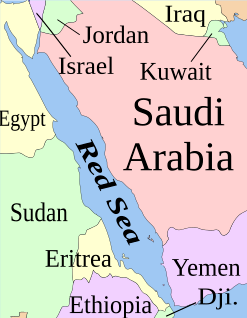
Yemen, Saudi Arabia, Dijbouti, and Eritrea
To see the truth clearly we must understand its context.
Yemen and the Queen of Sheba
Yemen was the legendary land of the Queen of Sheba (or Saba), a seeker of wisdom, who visited Israel’s King Solomon, son of David, during Solomon’s reign estimated to be about 970 to 931 BC. See 1 Kings 10:1-13 or 2 Chronicles 9:1-12. Her capital was probably near Marib, about 75 miles east of Yemen’s modern capital of Sanaa. In ancient times. Marib and the Sabeans were known for their lucrative frankincense and myrrh trade.
Yemen and the Houthi Rebels
Since the beginning of a civil war in September 2014, there have been two governments in Yemen. Both claim to be the legitimate government, but the U.S. and most of its Western and Persian Gulf allies, especially Saudi Arabia, recognize only the Presidential Leadership Coalition (PLC), which was in power before the civil war. Due to political instability, there have been no elections since 2003. The President of Yemen recognized by the U.S. is Rashad al-Alimi. The Supreme Leader of the Houthis is Abdul-Malik al-Houthi.
The estimated population of Yemen in 2026, according to the World Population Review, is 43 million, larger than Saudi Arabia’s estimated 2026 population of 35.2 million. Yemen’s population is about 53% Sunni Muslim and 47% Shia Muslim. Before 1970, Shia Muslim government prevailed. Sunni Muslims took control in a controversial 1970 election, electing the President and Single House Legislature separately. There was a long history of conflict thereafter, with the Shia Muslims coming under increased persecution and pressure to become cultural Sunnis. The Houthi tribes, being essentially Shia-Yazidi Muslims, represented about 45% of the population and formed the backbone of resistance to the incumbent Sunni Muslim government. The remaining 2% of Shia are Shia-Ismaili Muslims, who have been sympathetic to Shia politics but less actively. The Houthi Rebels are a religious-military organization of about 350,000.
The Houthi Rebels were able to take over, Sanaa, the constitutional capital of Yemen in mountainous northwestern Yemen in September 2014. The Shia-Yazidis are concentrated in northwestern Yemen. Averaging 7,500 feet in elevation, Sanaa is also the largest city in Yemen with 3.3 million people. From Sanaa, the Houthis rapidly expanded their control to all of northwestern Yemen and began pressing on the most populous PLC held areas. Marib is now a major refugee center—over one million Sunnis—and currently under contested PLC control.
Saudi Arabia began bombing Houthi military and civilian areas in defense of the PLA government early in the war and has periodically made aerial attacks on Houthi forces. Some have described the Yemen civil war as a Saudi-Arabian proxy war against Iran, which is obviously sympathetic to the Shia and Houthi cause. Iran has been accused of contributing more than sympathy. The Houthis are getting missile and drone technology, supplies, and advice from experts.
Yemen borders Saudi Arabia, Oman, the Arabian Sea, and the Red Sea, the last two giving it over 1,200 miles of coastline. Yemen is slightly larger than California, but only one-fifth the size of Saudi Arabia.
The U.S. and Western recognized capital of Yemen has been moved to Aden, an important seaport of 1.1 million people on the Gulf of Aden leading to the Arabian Sea. It is about 110 miles from the eastern border of Yemen on the Red Sea.
Geographically, the Shia Yazidi population is concentrated in the most populous northwestern part of Yemen, while the Sunni population is concentrated in the southwestern part of Yemen. Except for the coastal areas of Yemen along the coast of the Arabian Sea, the eastern 80% of Yemen is sparsely settled desert plains or highlands where summer temperatures are extreme, and the only inhabitants are small bands nomad herders.
Yemen’s estimated GDP-PPP was only $70 billion in 2025, 117th in the world. Yemen is one of the poorest countries in the world, having a per capita annual GDP-PPP of only $1, 670. By contrast, it northern neighbor, Saudi Arabia’s estimated GDP-PPP is estimated at $2.9 trillion, 17th highest in the world. Saudi Arabia’s per capita annual GDP-PPP is $78,815, 19th in the world. Petroleum production represents 25% of Yemen’s GDP and 63% of government revenue. GDP dropped 50% following the beginning of civil war in 2014 due to a Saudi Arabian blockade and government instability. Yemen ranks 27th in proven global oil reserves.
Since the beginning of the 2014 civil war between the Western and Saudi recognized government and the Houthi government, the Armed Forces of Yemen, which include Army, Navy, Air Force, and other specialized forces have been divided. The PLC (Presidential Leadership Coalition) of the Aden government has total manpower of about 250,000. The Houthi forces have over 200,000 supplemented by tribal levies.
According the United Nations, about 150,000 persons have been killed in the civil war, and another 227,000 have died of famine and health problems related to the war.
The National Resistance Forces (NRF) estimated at 35,000, allied with the PLA, Yemeni Army loyalists, and Saudi Arabia have claimed to have captured 750 tons of weapons, drones, rocket parts, and ammunition shipped by the Iranian IRGC to the Houthis. It is generally conceded that Iran, through both the IRGC and Hezbollah, is giving some advisory and technical assistance to the Houthi supporting drones and short range missiles. The Houthis have also made some attacks on Israel in sympathy with the Gaza Palestinians. They have even been able to harass U.S. Navy ships in the Red Sea. The Houthi claim they buy all their weapons on the International Black Market for weapons—many probably obtained in from the Afghanistan abandonment and Ukrainian corruption.
In their rough mountain terrain, the Houthis have also shown they can survive powerful American and British air attacks, as in January 2025, and still remain a serious missile and drone threat to shipping in the Red Sea.
Yemen has a major port on the eastern coast of the Red Sea. Hodeidah, approximately southwest of Samaa. Updated population estimates vary widely in Yemen, but according to Worldstats, the population is about 735, 000, which may include some metro area. The Houthis have controlled the city and port since 2015. The Israeli Air Force struck the port several times in 2024 in retaliation for Houthi missiles hitting Israel’s Ben Gurion International Airport and Israeli targets in Tel Aviv.
The Houthis’ most serious threat is that they have the potential to block shipping via the 20-mile-wide Bab el-Mandeb Strait at the southern entrance to the Red Sea, one of the world’s busiest maritime routes. Bab el-Mandeb is the only point of entry to the Red Sea from the Indian Ocean and is a vital choke-point for energy supplies heading to Asia, Europe, and North America. Approximately 12% of seaborn petroleum shipping goes through Bab-el-Mandeb. Combine that with 20% coming through the Strait of Hormuz in the Persian Gulf, and it becomes a severe global energy shortage and global economic depression.
Saudi Arabian Ports on the Red Sea
In Part 1 of this series on the Persian Gulf and Red Sea, Saudi Arabia was covered as a principal nation on the Persian Gulf, but it is also a principal nation on the Red Sea. To give some perspective on Saudi Arabia’s importance, it is important to repeat some statistics about oil, because they are of global importance. Saudi Arabia has the second highest known petroleum reserves in the world, exceeded only by Venezuela. Iran is third. Saudi Arabia is third in production and has one of the lowest production costs at $8.98 per barrel.
Saudi Arabia’s Jeddah Islamic Port on the Red Sea handles 56% of Saudi Arabia’s seaborne tonnage. Jeddah is particularly important for shipping through the Suez Canal at the Red Sea’s northern end. Jeddah is the most important port on the Red Sea.
The fifth most important port on the Red Sea is also Saudi. This is the Yanbu Commercial Port, which is a major exporter of oil and petroleum products.
Other important Red Sea ports include the King Abdullah Port known for its high efficiency container handling. The King Faud Industrial Port is located near Yanbu and is a major exporter of oil and petrochemical products. The port NEOM/Oxagan is an important new technology development. Jazan Port was established 1976 and is located just north of the Yemen border. It has become Saudi Arabia’s third largest port and is strategically nearest the Bab-el-Mandeb Strait.
The Republic of Dijbouti
Dijbouti is in East Africa and is across the Bab-el-Mandeb Strait of the Red Sea from Yemen. It is the smallest country in continental Africa, but it about the same size as Israel, New Jersey, or New Hampshire. It has a population of about 1.1 million. The capital city is Djibouti City with 780,000 inhabitants. While the official languages are Arabic and French, the actual national languages are the Cushitic languages of Somali and Afar. About 60% of the population are ethnic Somalis; 35% are ethnic Afar; and 5% are ethnic Arabs. Islam is the official religion, and the population is 94% Muslim—87% Sunni, 5% non-denomination Muslim, and 2% Shia—while about 6% are Christian.
Djibouti borders Somalia, Ethiopia, Eritrea to its north, the Red Sea, and the Gulf of Aden
The Djibouti GDP-PPP is $7.2 billion, per capita $6,985, 137th in the world. About 45% of the population does not have access to electricity. The Service sector, including port trade, is 80% of the economy, industrial production is 17%, and agriculture 3%. The unemployment rate remains extremely high.
Djibouti has a president and a national assembly, but it is an authoritarian dictatorship. The President is Ismail Omar Guellah, who assumed office in 1999. The Djibouti Armed Forces have just over 20,000 members. Primary foreign policy influences on Dijbouti are the United States, France, Somalia, Ethiopia, and Turkey.
Eritrea
According to the 2025 CIA Factbook, the population of Eritrea was 6.4 million. Other sources give a wide range of estimates. The name Eritrea was derived from the ancient Greek name for the Red Sea. It is a hot, dry strip along the western coast of the Red Sea, bordering Dijbouti, Ethiopia, and Sudan. The capital is Asmara with a roughly estimated population of about 783,000 and a Metro population close to 1.2 million. It is slightly larger than the U.S. state of Tennessee and about the size of Greece. Its economy is largely agricultural with 65% of land use being agricultural. GDP statistics show both agriculture and mining as the largest sectors of the economy with 20% each. Eritrea has no proven oil reserves and no annual oil extraction and production. Eritrea, however, possesses substantial mineral deposits, including gold, copper, zinc, potash, iron ore, limestone, gypsum, and natural gas
According to World Religion Database in 2020, Eritrea is only about 53% Muslim, and these are almost exclusively Sunni Muslims. Surprisingly, 46% are Christian of which 39% are Orthodox, 5% are Catholic, and 2% are Protestant. Pew Research, however, found 63% of Christians in the same year.
Eritrea is also multi-ethnic with the Tigrinya accounting for 50% of the population and the Tigre with 30%. Seven other tribal ethnic groups make up the balance. The Tigrinya are 60% Christian, and therefore close to two-thirds of Christians in Eritrea are Tigrinya. The Tigre are about 95% Muslim. The Tigrinya and the Tigre speak separate Ethio-Semitic languages. Eritrean DNA is similar to that of Somalia and Ethiopia. There is no official language in Eritrea but Tigrinya is the most widely spoken language, and both English and Arabic are often used for international business.
According to Global Firepower, Eritrea has active armed forces of about 350,000 with very small air force and navy components and ranks 119th of 145 rated.
The People’s Front for Democracy and Justice (PFDJ)is the only party allowed in Eritrea. President Isaias Afwerk has been in office since independence in 1993. The National Assembly of 150 seats has never met. There was a brief protest in 2001, but the protestors were arrested and have never been released. According to a V-Dem Democracy Indices report in 2023 Eritrea is rated the second least democratic country in the world and the least democratic in Africa. It has generally had strained relationships with neighboring countries, especially Ethiopia, which unilaterally annexed Eritrea in 1962. Previously, Eritrea had been under Italian and British administration. Both the United States and China have tried to improve relations with Eritrea in recent years.
Remembering the Wisdom of a Sabean Queen
In Matthew 12:42 Jesus says:
“The Queen of the South will rise at the judgement with this generation and condemn it; for she came from the ends of the earth to listen to Solomon’s wisdom, and now something greater than Solomon is here.” (NIV)
Part 4 will continue with Sudan, Egypt, and Israel.
 Mike Scruggs is the author of two books: The Un-Civil War: Shattering the Historical Myths; and Lessons from the Vietnam War: Truths the Media Never Told You, and over 600 articles on military history, national security, intelligent design, genealogical genetics, immigration, current political affairs, Islam, and the Middle East.